Tag: politics

  • Being Nice Is Not the Same Thing as Being Good

    Being Nice Is Not the Same Thing as Being Good

    One of the strangest arguments that repeatedly appears in political discourse is the idea that harmful political movements should be judged more gently because the people involved in them can sometimes be “nice in person.”

    Yes, many people who hold destructive political views are perfectly capable of being polite, friendly, or even charming in everyday interactions.

    But that has very little to do with the consequences of the ideas they support.

    History provides countless examples of people who were socially pleasant while simultaneously supporting or participating in deeply immoral systems. The ability to be personable does not erase the harm caused by one’s beliefs or actions.

    Human beings are complex. Someone can be a friendly neighbor, a generous host, or an engaging conversationalist while still supporting policies, movements, or ideologies that cause real harm to other people.

    Personal charm has never been a reliable measure of moral character.

    Yet in modern political debates, some commentators, particularly within media circles, occasionally suggest that ideological hostility should soften if the person expressing those ideas happens to be courteous in private conversation or polite in a televised debate.

    That standard makes very little sense.

    Political ideas should be judged based on their substance and consequences, not the personal demeanor of the person expressing them.

    A polite presentation does not make a harmful idea less harmful. A friendly tone does not transform prejudice into principle.

    Being civil in conversation is a positive trait. But civility should not become a substitute for accountability.

    If a political movement promotes policies or rhetoric that harm vulnerable communities, that reality does not disappear simply because some of its supporters are personable in everyday interactions.

    The lesson here is simple.

    Do not confuse personal niceness with moral integrity.

    They are not the same thing.

  • American History Myths #5: Once More on the Myth That the Major Political Parties Never Realigned

    American History Myths #5: Once More on the Myth That the Major Political Parties Never Realigned

    I’m going to beat the proverbial dead horse here, but I feel I need to reiterate a point I made previously in this blog.

    One of the most persistent myths in modern American political discourse is the claim that the Democratic and Republican parties have remained ideologically consistent throughout history. According to this narrative, the Republican Party has always been the party of civil rights and racial progress, while the Democratic Party has always been the party of racism.

    This claim collapses under even the most basic historical scrutiny.

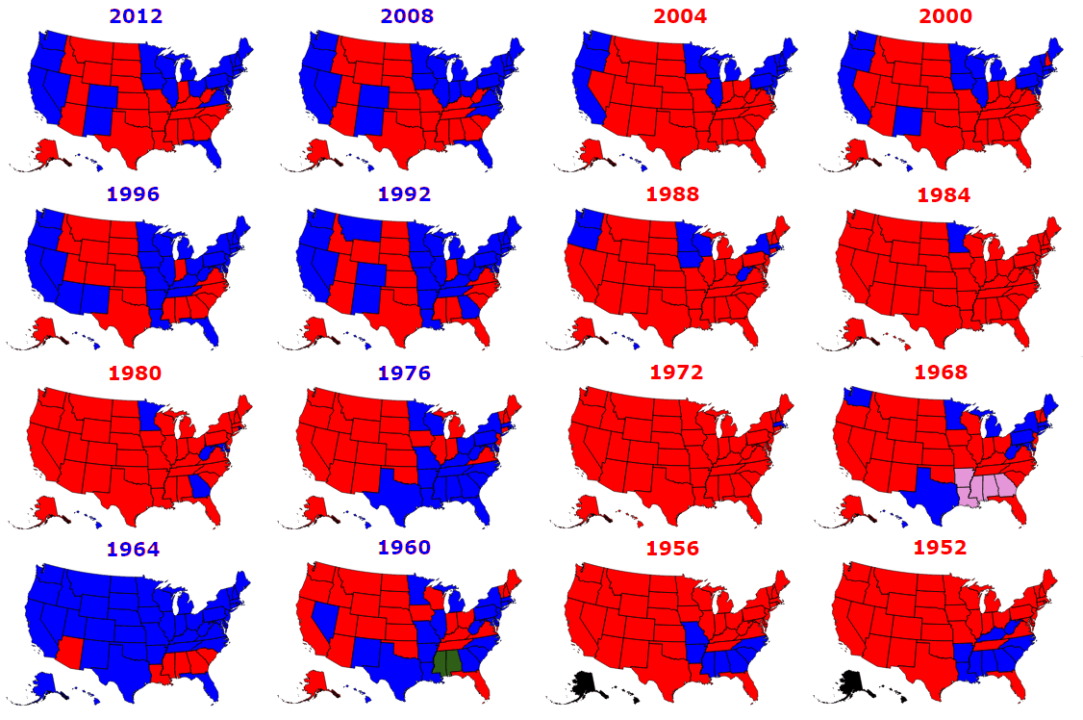
    To maintain the illusion, modern conservatives must ignore several inconvenient facts. They must ignore the political dealignment and realignment that occurred between the late nineteenth century and the late twentieth century. They must ignore the steady migration of white Southern conservatives—particularly segregationists—from the Democratic Party into the Republican Party during the second half of the twentieth century.

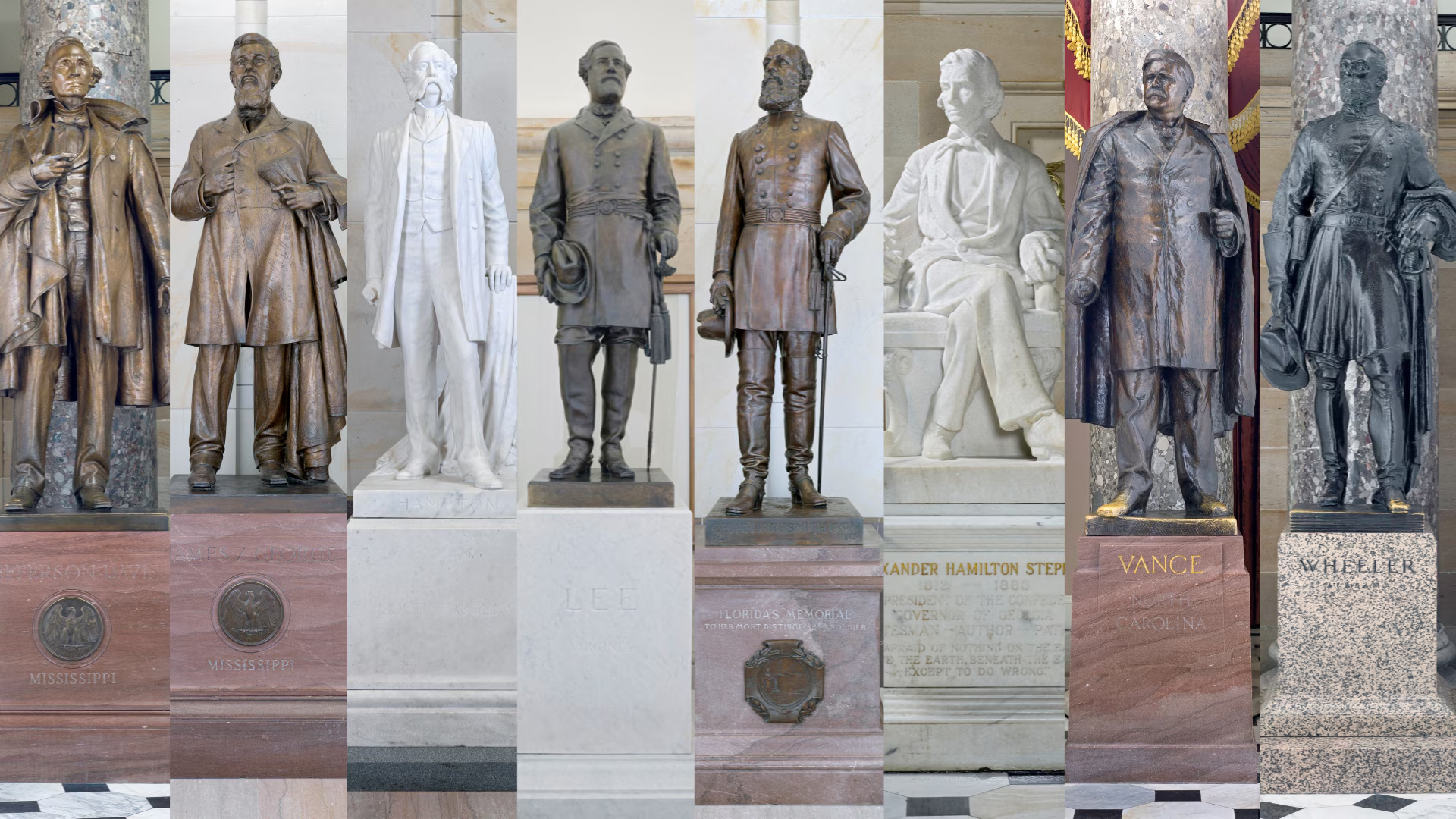
    They must also ignore the uncomfortable reality that many of the political figures celebrated in modern conservative circles were themselves defenders of slavery, segregation, and white supremacy.

    The historical record is clear: the ideology of Southern conservatism did not disappear after the Civil Rights Movement. It simply found a new political home.

    During the 1960s through the 1990s, many of the most hardline segregationist politicians—often referred to as Dixiecrats—gradually abandoned the Democratic Party and aligned themselves with the Republican Party. At the same time, the Republican Party increasingly adopted political strategies designed to attract white Southern voters who opposed civil rights reforms.

    This shift was not subtle. It was openly discussed by political strategists and historians alike.

    Yet modern conservatives often pretend that none of this happened.

    Instead, they promote a simplified narrative in which the Republican Party “freed the slaves” and therefore cannot possibly bear any responsibility for the racial politics that emerged in the twentieth century. The fact that the ideological descendants of segregationists now overwhelmingly identify as conservative Republicans is conveniently ignored.

    At the same time, many conservative politicians and commentators openly celebrate figures from the Confederate past while dismissing or ignoring the Republican leaders who actually fought to preserve the Union and end slavery.

    Where are the monuments to Republican generals such as William Tecumseh Sherman or Ulysses S. Grant in the regions that once formed the Confederacy? Why are Confederate leaders, who were Democrats of their time, so often praised in modern conservative political culture?

    The answer is uncomfortable but obvious.

    For many conservatives, the issue has never truly been about party labels. It has always been about political ideology.

    This ideological continuity becomes particularly visible when modern politicians attempt to avoid even the most basic historical truths.

    For example, when asked about the causes of the American Civil War, some contemporary conservative politicians have offered vague explanations about “government,” “freedom,” or “states’ rights,” while carefully avoiding the central issue that historians overwhelmingly agree defined the conflict: chattel slavery.

    Yet the leaders of the Confederacy themselves left no such ambiguity.

    In their own declarations of secession, Southern states repeatedly and explicitly identified the preservation of slavery as the primary reason for leaving the Union.

    The historical record could not be clearer.

    Attempts to obscure that fact are not efforts to promote historical nuance. They are attempts to preserve comforting myths about the past.

    And those myths serve a political purpose.

    By denying the ideological continuity between past and present forms of white supremacist politics, modern conservatives attempt to distance themselves from the legacy of segregation and racial hierarchy while continuing to benefit from many of the political narratives that sustained those systems.

    None of this is to suggest that racism exists exclusively within one political party. Racism has existed across the American political spectrum throughout history.

    But it is impossible to have an honest conversation about American history—or modern American politics—without acknowledging the ideological realignment that reshaped the nation’s two major political parties during the twentieth century.

    History cannot be rewritten simply because it makes some people uncomfortable.

    In fact, the opposite is true.

    Understanding the darker chapters of our past is precisely how societies learn to avoid repeating them.

    Black Americans have long demonstrated that it is possible to love this country while also confronting its historical injustices. Despite centuries of discrimination, violence, and exclusion, Black Americans have served in the nation’s military, represented the country in international competition, and fought relentlessly to expand the promise of American democracy.

    Acknowledging historical injustice does not weaken the country.

    Pretending that those injustices never happened does.

    If Americans truly want to move forward, they must first be willing to tell the truth about where they have been.

  • Policing, Power, and the Battle Over Public Narrative Part 2: The Myth of a “War on Police”

    Policing, Power, and the Battle Over Public Narrative Part 2: The Myth of a “War on Police”

    One of the most common claims made by critics of the Black Lives Matter movement is that it promotes hostility toward law enforcement or contributes to what some commentators describe as a “war on police.”

    This claim has been repeated frequently in political commentary and media coverage. However, when the available evidence is examined, the narrative becomes far less convincing.

    Statistics from organizations such as the National Law Enforcement Officers Memorial Fund show that the number of police officers killed in the line of duty has generally declined over the past several decades (except for during the peak of the COVID pandemic, when all crimes were spiking).

    Even during the years following the rise of the Black Lives Matter movement, the overall number of officer fatalities has remained historically low compared to earlier periods in American history.

    In other words, the idea that police officers are facing unprecedented levels of violence is not supported by the available data.

    It is also worth noting that the individuals responsible for attacks on police officers come from a wide variety of backgrounds and motivations. Some attacks have been politically motivated, while others were committed by individuals with no connection to any political movement.

    Despite this, critics often attempt to attribute every violent incident involving police officers to the Black Lives Matter movement as a whole.

    This is a logical fallacy.

    Large social movements consist of many individuals and groups with different motivations and beliefs. Holding an entire movement responsible for the actions of isolated individuals is both inaccurate and intellectually dishonest.

    At the same time, when politically motivated violence against police officers has been carried out by individuals associated with far-right ideologies, those incidents are rarely used to condemn conservative political movements as a whole.

    This double standard plays a significant role in shaping the public narrative surrounding policing and protest.

    Criticism of police misconduct is not the same thing as hostility toward police officers. In fact, many people who call for police accountability also believe that effective and professional law enforcement is essential to a functioning society.

    The real issue is not whether police officers deserve support.

    The real issue is whether the institutions responsible for enforcing the law are held accountable when mistakes or abuses occur.

  • Policing, Power, and the Battle Over Public Narrative Part 1: The Origins of “Black Lives Matter”

    Policing, Power, and the Battle Over Public Narrative Part 1: The Origins of “Black Lives Matter”

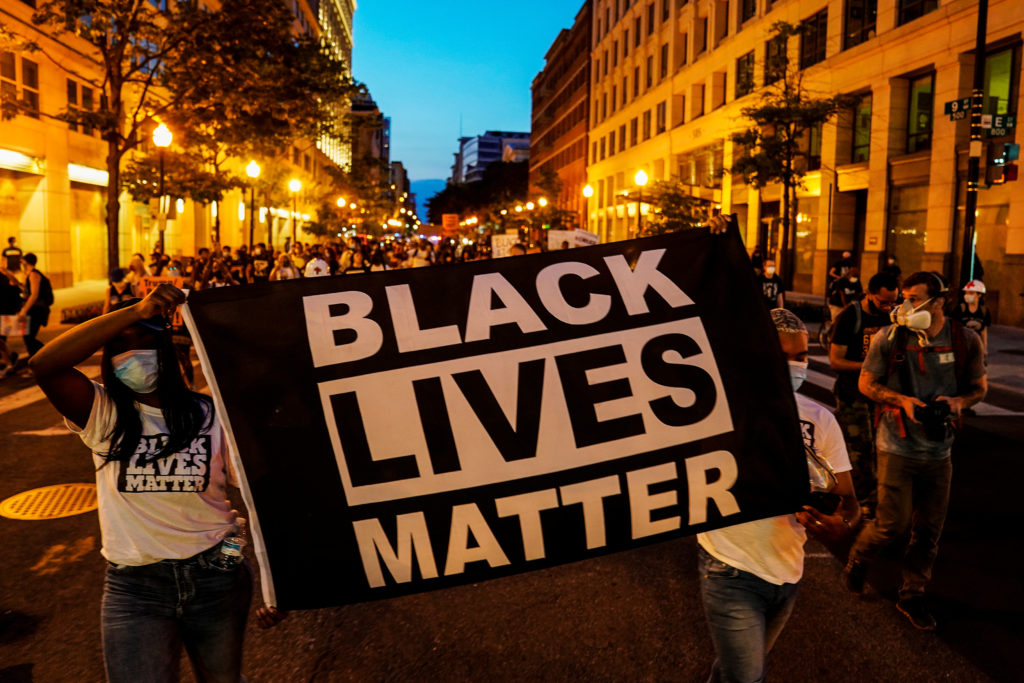
    In recent years, the phrase “Black Lives Matter” has become one of the most widely discussed and widely misunderstood slogans in American public life.

    To many supporters, the phrase represents a call for accountability and equal justice under the law. To many critics, however, it has been portrayed as anti-police, anti-white, or even anti-American.

    To understand the movement honestly, it is important to start with the basic facts about how it began.

    Black Lives Matter did not emerge from a political think tank, a political party, or a coordinated national organization. Instead, it began as a social media response to a widely publicized case that many people believed represented a failure of the justice system.

    On February 26, 2012, seventeen-year-old Trayvon Martin was shot and killed in Sanford, Florida, by neighborhood watch volunteer George Zimmerman. Martin was unarmed and had been walking back from a convenience store after purchasing a bag of Skittles and a drink.

    Initially, Zimmerman was not arrested. The police accepted his claim of self-defense and released him without charges.

    As news of the case spread across social media, many Americans (particularly Black Americans) viewed the situation as part of a long pattern in which violence against Black people was often minimized or excused.

    Following Zimmerman’s eventual acquittal in 2013, three community organizers, Alicia Garza, Patrisse Cullors, and Opal Tometi, helped popularize the phrase “Black Lives Matter.”

    Garza made a Facebook post which ended in the phrase, “Our lives Matter, Black Lives Matter”. The hashtag and online campaign were born due to that post, and it went viral.

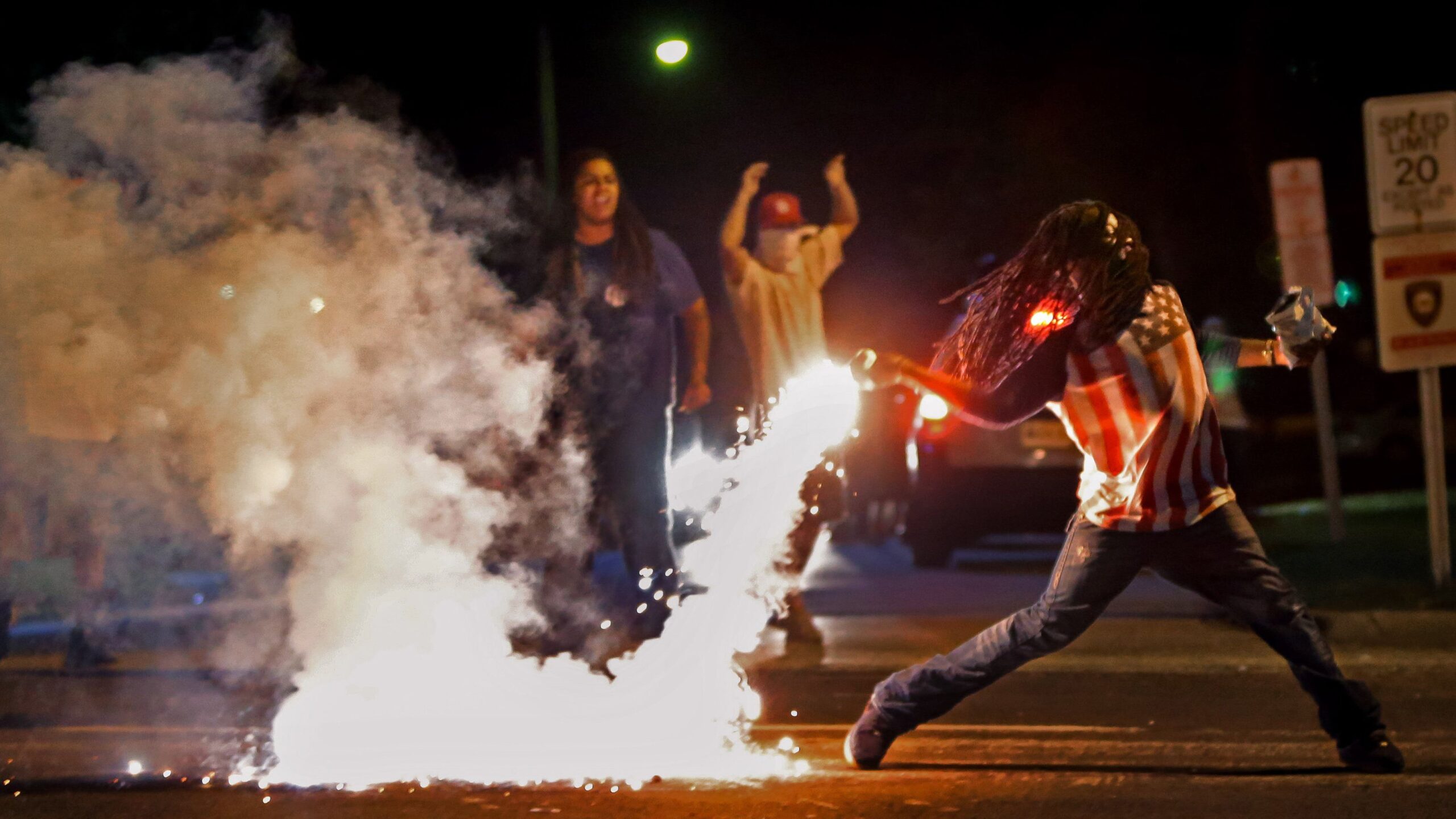
    Black Lives Matter didn’t make it into the national and mainstream public spotlight until the following summer (2014) after the killing of Michael Brown Jr. by Ferguson Officer Darren Wilson. More than one hundred Black Lives Matter protestors came from out of state to Ferguson, Missouri, a suburb of St. Louis, to join the local protests that had been going on immediately after the shooting.

    The phrase was not meant to suggest that other lives do not matter. Instead, it was intended to emphasize a specific concern: that Black lives have historically been treated as less valuable within American legal and social systems.

    In other words, the statement “Black Lives Matter” was not meant to exclude anyone. It was meant to highlight a problem that many people believed had long been ignored.

    The movement that followed was decentralized and loosely organized. It consisted of activists, community leaders, and ordinary citizens who were concerned about issues such as police accountability, racial profiling, and unequal treatment within the criminal justice system.

    Understanding this origin is important because much of the debate surrounding Black Lives Matter today is shaped by narratives that emerged after the movement began — narratives that often bear little resemblance to its original purpose.

  • Why I Still Celebrate Independence Day

    Why I Still Celebrate Independence Day

    Every year on July 4th, Americans celebrate Independence Day with family gatherings, barbecues, and fireworks. For many, it is a day of patriotic pride, a celebration of freedom and the sacrifices made to preserve it.

    But for others, the holiday carries a very different meaning.

    Frederick Douglass once famously asked, “What to the slave is the Fourth of July?” In 1852, his answer was clear: the holiday represented a painful contradiction between America’s ideals and its reality. More than a century later, that question still echoes—but the answer has evolved.

    Critics of Independence Day often point out a painful historical truth: when the United States declared its independence in 1776, the promise of liberty did not apply to everyone. Millions of people were enslaved, Native Americans were being displaced and killed, and women and poor men were excluded from political power.

    The contradiction is obvious.

    The same document that declared, “We hold these truths to be self-evident, that all men are created equal,” was written by Thomas Jefferson, who owned slaves and wrote extensively about his belief in Black inferiority.

    These criticisms are not wrong. They are historically accurate.

    The freedom celebrated on July 4th was originally intended primarily for land-owning white men. Black Americans, Native Americans, women, and many others were excluded from those rights.

    Even during the Revolutionary War, enslaved Black people who sought to fight for the American colonies were often rejected. Meanwhile, the British offered freedom to enslaved people who joined their forces. Later, during the Constitutional Convention, the young nation again refused to confront slavery to maintain unity between Northern and Southern states.

    For these reasons, I understand why some people view Independence Day with skepticism or even contempt.

    But while I sympathize with that perspective, I do not share it.

    Despite the hypocrisy of many of the Founding Fathers, we must also remember another truth: this country was built in large part by the labor, skill, and resilience of enslaved Black people.

    The American colonies became economically powerful through crops such as tobacco, sugar, and rice. These industries made their overwhelming prosperity possible by enslaved labor and agricultural knowledge brought from Africa. In many ways, the wealth that allowed the colonies to rebel against Britain was created by the very people who were denied freedom.

    Our ancestors helped build this country.

    And many of them knew it.

    Throughout the nineteenth century, some white abolitionists supported efforts to relocate free Black Americans to Africa through organizations such as the American Colonization Society. Liberia itself was founded by freed American slaves.

    But many Black Americans rejected that idea. They chose to remain in the United States and fight for their rightful place within the country their ancestors had helped build.

    That is a perspective I share.

    If someone kidnaps you, forces you to build a house, and then tells you that you are free to leave once the work is finished, that does not erase the fact that you helped build the house.

    You have a claim to it.

    I am an American. This is my country.

    The personal beliefs of many of the Founding Fathers matter less to me than the political framework they created. The words they wrote, however imperfectly applied at the time, provided the foundation for later struggles for freedom.

    The ideals expressed in the Declaration of Independence and the United States Constitution were eventually used by abolitionists, civil rights leaders, and countless activists to argue that the nation must live up to its own principles.

    Jefferson may not have meant all people when he wrote that all men are created equal. But that is what he wrote, and those words became powerful tools in the fight for equality.

    The American political system, flawed as it has been, allowed movements for abolition, civil rights, and expanded democratic rights to emerge and reshape the country.

    The fact that I can speak freely today (even critically) about the history and institutions of this country is evidence of that evolution.

    Because of the protections enshrined in the Constitution and the Bill of Rights, I can express my beliefs, criticize injustice, and advocate for change without fear of imprisonment or execution.

    That freedom matters.

    So, when I celebrate Independence Day, I am not celebrating the perfection of the Founding Fathers. I am not celebrating a past that excluded my ancestors.

    What I celebrate is freedom itself.

    The freedom that was denied to my ancestors.

    The freedom that generations of Americans struggled to expand.

    The freedom that remains imperfect, but real.

    This country has a painful history, and it still faces serious challenges. But it is also my home.

    And despite everything, I love it.

    When I celebrate Independence Day, I celebrate the ongoing struggle to make the promise of liberty real for everyone.

    Because the words written in 1776 still matter:

    “We hold these truths to be self-evident, that all men are created equal, that they are endowed by their Creator with certain unalienable Rights, that among these are Life, Liberty and the pursuit of Happiness.”

    May we continue working toward a country where those words apply to all of us.

  • American History Myths #4: The Myth That the Parties Never Realigned

    American History Myths #4: The Myth That the Parties Never Realigned

    One of the most persistent claims in modern political debates is that the Democratic and Republican parties have remained essentially the same throughout American history. According to this argument, the political coalitions and ideologies of the nineteenth century supposedly still define the parties today.

    This claim ignores one of the most well-documented developments in American political history: the gradual ideological realignment of the two major parties from the late nineteenth century through the late twentieth century.

    Following the Civil War, the Republican Party was widely associated with the Union victory and the abolition of slavery. During Reconstruction, Republicans supported many early civil rights measures intended to protect the rights of newly freed Black Americans.

    However, that political commitment weakened dramatically after the Compromise of 1877, which effectively ended Reconstruction. Federal enforcement of civil rights protections collapsed, and white supremacist governments regained control across much of the South.

    For decades afterward, Southern politics was dominated by segregationist Democratic politicians often referred to as Dixiecrats. These politicians supported Jim Crow laws, racial segregation, and policies designed to disenfranchise Black voters.

    But American political coalitions were not static.

    Beginning in the mid-twentieth century, particularly during the Civil Rights Movement of the 1950s and 1960s, many white Southern conservatives began shifting their political allegiance. As national Democratic leaders increasingly supported civil rights legislation, large numbers of segregationist voters and politicians gradually moved toward the Republican Party.

    This transition did not happen overnight. It unfolded over several decades, from the 1960s through the 1980s and even into the early 1990s. Historians and political scientists commonly refer to this process as political realignment.

    The shift can be seen in electoral patterns across the South. States that had reliably voted for Democratic presidential candidates for nearly a century increasingly began supporting Republican candidates. Conservative Southern politicians who once identified as Democrats also began switching parties.

    Despite this well-documented transformation, some modern political commentators attempt to deny that any realignment occurred. Instead, they argue that the parties remain essentially unchanged and that historical responsibility for segregationist politics belongs exclusively to one party.

    But historical evidence tells a more complicated story.

    The ideological divide in American politics has long revolved less around party labels and more around competing views about civil rights, federal power, and social hierarchy. Over time, the political coalitions representing those views have shifted between parties.

    This is why discussions of American political history require careful attention to ideology, region, and historical context, rather than relying solely on party labels.

    Reducing the history of American civil rights struggles to simple partisan talking points obscures the reality of how political coalitions evolve. Understanding that evolution is essential for understanding the political landscape of the United States today.

  • American History Myth #3: The Myth That Civil Rights Were Simply a “Republican Achievement”

    American History Myth #3: The Myth That Civil Rights Were Simply a “Republican Achievement”

    Modern political debates often reduce complex historical events to simple partisan talking points. One of the most common claims is that the Civil Rights Movement and the landmark civil rights legislation of the 1960s were primarily the achievement of conservative Republicans.

    This claim is frequently used in contemporary political arguments, but it oversimplifies a far more complicated historical reality.

    It relies on several incorrect assumptions:

    1. The Republican Party has always been a party of fiscal, social, and small-government conservatives.
    2. American political parties historically operated as unified ideological blocs rather than coalitions containing both liberal and conservative wings.
    3. Republicans were never involved in segregationist politics, white supremacist movements, or anti-Black rhetoric and policies.

    All three assumptions are historically inaccurate.

    In the decade following the Civil War, Republicans championed early civil rights legislation during Reconstruction. However, after the contested election of 1876 and the Compromise of 1877, which effectively ended Reconstruction, national political commitment to protecting Black civil rights declined dramatically.

    During the late nineteenth and early twentieth centuries, what historians often call the Nadir of American Race Relations (roughly 1887–1923), racist policies and segregation became entrenched across much of the United States. During this period, many politicians from both major parties adopted or tolerated segregationist attitudes.

    Fast forward to the 1960s and the passage of the Civil Rights Act of 1964.

    The legislation was originally proposed by President John F. Kennedy (D) in 1963. After Kennedy’s assassination, President Lyndon B. Johnson (D) made the bill a central priority of his administration and pushed aggressively for its passage.

    Several key members of Congress played major roles in advancing the legislation, including:

    • Hubert Humphrey (D–MN)
    • Emanuel Celler (D–NY)
    • Everett Dirksen (R–IL)
    • William McCulloch (R–OH)

    The final legislation was the result of bipartisan cooperation, though it was strongly driven by the Democratic administration and several Democratic leaders in Congress.

    The final vote totals were:

    House of Representatives
    289–126 (70–30%)

    Senate
    73–27

    When broken down by party, the numbers appear to show stronger Republican support:

    House

    • Democrats: 153–91 (69%)
    • Republicans: 136–35 (82%)

    Senate

    • Democrats: 44–23 (66%)
    • Republicans: 27–6 (82%)

    At first glance, these numbers might suggest that Republicans were the primary supporters of civil rights legislation.

    However, this interpretation ignores a crucial factor: region.

    When the votes are separated by region, a very different pattern appears.

    House of Representatives

    Northern members: 281–32 (90%) in favor
    Southern members: 8–94 (8%) in favor

    Senate

    Northern members: 72–6 (92%) in favor
    Southern members: 1–21 (5%) in favor

    In other words, the major divide was not simply party affiliation—it was North versus South.

    Looking at the votes by both region and party makes this even clearer.

    House

    Southern Democrats: 8–83 (9%) in favor
    Southern Republicans: 0–11 (0%) in favor

    Northern Democrats: 145–8 (95%) in favor
    Northern Republicans: 136–24 (85%) in favor

    Senate

    Southern Democrats: 1–20 (5%) in favor
    Southern Republicans: 0–1 (0%) in favor

    Northern Democrats: 45–1 (98%) in favor
    Northern Republicans: 27–5 (84%) in favor

    Not a single Southern Republican voted for the Civil Rights Act of 1964. Meanwhile, Northern Democrats supported the bill at even higher rates than Northern Republicans.

    Another important point often overlooked in modern political debates is that Democrats held large congressional majorities during this period.

    In the 88th Congress (1964), Democrats held:

    • 66 seats in the Senate
    • 253 seats in the House

    Without substantial Democratic support, the Civil Rights Act simply would not have passed.

    A similar pattern appeared in the Voting Rights Act of 1965. At that time, Democrats held even larger majorities:

    • 68–32 in the Senate
    • 295–140 in the House

    The final votes were:

    House
    333–85

    Senate
    77–19

    Again, both parties supported the legislation. But the historical record shows that the outcome cannot be reduced to a simple narrative about one party single-handedly delivering civil rights.

    The reality is more complex.

    Civil rights legislation in the 1960s passed through bipartisan coalitions, but those coalitions were shaped far more by regional politics and ideological divisions than by party labels alone.

    Reducing this history to a partisan talking point oversimplifies one of the most important political struggles in American history.

  • How Crime Statistics Are Used to Push Racist Narratives

    How Crime Statistics Are Used to Push Racist Narratives

    One of the most common talking points used in online debates about race and crime is the so-called “13/50” statistic. The claim is frequently repeated by people attempting to justify racist narratives about Black Americans and criminality.

    But statistics, when presented without context, can easily be used to mislead.

    The “13/50” argument relies on the selective interpretation of crime statistics, particularly FBI arrest data. It highlights the overrepresentation of Black Americans in certain categories of arrests, especially homicide and robbery, while ignoring the broader context of crime statistics and how those numbers are interpreted.

    For example, according to the U.S. Census Bureau, white Americans (white alone) make up roughly 60 percent of the U.S. population. When looking at FBI arrest data, however, white Americans account for large majorities in many categories of crime.

    Using the same FBI tables often cited in online debates, white Americans account for:

    • 82% of DUI arrests
    • 75% of sex offense arrests (excluding rape)
    • 74% of vehicle theft arrests
    • 72% of drug abuse violation arrests
    • 70% of rape arrests
    • 68% of burglary arrests
    • 67% of property crime arrests
    • 66% of arrests for offenses against family and children
    • 65% of simple assault arrests
    • 62% of aggravated assault arrests
    • 62% of arrests for possession of stolen property

    Overall, white Americans account for roughly 69 percent of all arrests, a number that exceeds their share of the population.

    None of this means that crime patterns should be ignored, or that certain communities do not face serious challenges related to violence and crime. Black Americans are indeed statistically overrepresented in some categories of arrests.

    But simply presenting one statistic without context does not explain why those patterns exist.

    Crime statistics are shaped by many factors, including poverty, neighborhood segregation, historical inequality, policing patterns, economic opportunity, and social conditions. Reducing complex social problems to a single racial statistic ignores these realities and turns data into a political weapon.

    This is why statistics must always be interpreted carefully.

    Numbers can illuminate reality, but they can also be manipulated to reinforce existing prejudices. Selective data presentation allows people to construct narratives that appear objective while still serving ideological agendas.

    The goal of examining these statistics is not to deny problems within any community, nor is it to portray any racial group as inherently criminal or morally inferior.

    Rather, the point is to demonstrate how easily statistics can be used to construct misleading narratives.

    When numbers are stripped of context and deployed as political talking points, they stop being tools of understanding and become instruments of propaganda. This is why Charlie Kirk wasn’t an objective truth teller. He was a racist but skillful manipulator of facts.

    Understanding crime, inequality, and social policy requires more than slogans and selective data. It requires an honest analysis of the underlying conditions that shape those numbers in the first place

  • American History Myth #2: The Myth of “Anglo-American Culture”

    American History Myth #2: The Myth of “Anglo-American Culture”

    Why American culture has always been a cultural fusion.

    In recent years, the word “culture” has increasingly become a coded talking point in political debates about immigration and national identity. Some commentators claim that the United States was founded on a supposedly pure “Anglo-American culture” that must be protected from outside influence.

    The problem is that this idea collapses under even basic historical scrutiny.

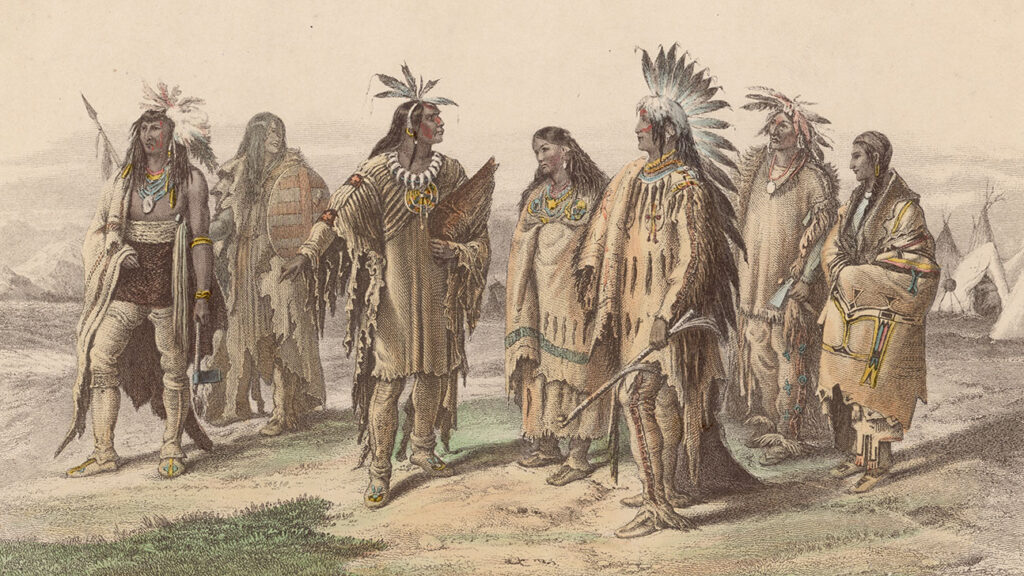
    From its very beginning, the United States was not the product of a single culture. It emerged from the interaction of many peoples: Native Americans, Europeans from multiple nations, and Africans brought through the transatlantic slave trade. What developed over time was not a uniform tradition but a cultural fusion.

    Even the political ideas behind the United States were influenced by multiple traditions. The Magna Carta is often cited as an inspiration for American constitutional principles, but historians have also noted the influence of the Iroquois Confederacy’s Great Law of Peace on early American political thought.

    The Iroquois Confederacy’s Great Law of Peace was one of the inspirations for the Constitution of the United States

    The same cultural blending appears throughout everyday American life.

    Many foods commonly associated with European cuisine actually originated in the Americas. Crops such as corn, potatoes, and tomatoes, and meats such as turkeys were unknown in Europe before the Columbian Exchange. Today, these foods are staples in dishes that people often assume are traditionally European.

    American music tells a similar story. Genres that many people associate with “white” American culture (such as country, bluegrass, and rock) developed from the interaction of African instruments and musical traditions with European instruments and folk styles. Even square dancing reflects this cultural exchange.

    The English language as spoken in the United States also reveals the depth of these influences. Many common words come from Native American languages. Animals such as moose, coyote, and skunk all derive their names from Indigenous sources. Other words, such as banjo, banana, cola, yam, and goober, entered English through African languages.

    This pattern is not unique to the United States. Cultural mixing has shaped societies throughout history.

    The culture of the modern United Kingdom, for example, developed from layers of migration and conquest. The British Isles were shaped by the interactions of Celtic peoples, Romans, Anglo-Saxons, Vikings, Normans, and others. Each group influenced the culture that followed.

    The same dynamic occurred in the United States.

    Throughout American history, waves of immigrants from Ireland, Germany, Italy, Poland, China, Japan, Mexico, and many other places have contributed to the country’s evolving culture. Each group added elements that eventually became part of what we now recognize as American life.

    Even in the colonial period, there was no single “Anglo-American” culture. Colonial societies differed dramatically from region to region. New York began as a Dutch colony before the British took control. Pennsylvania attracted Quakers and later large numbers of Catholics. Delaware was originally settled by the Swedes. Cultural diversity existed from the very beginning.

    This is why the claim that America must preserve a single “Anglo-American culture” is historically misleading. American culture has never been static, and it has never belonged to just one group.

    It has always been shaped by the interaction of many peoples and traditions.

    The United States will continue to evolve as people from places such as Nigeria, Honduras, Haiti, Nepal, and Fiji make their lives here. That evolution is not a threat to American culture. It is how American culture has always developed.

    No culture remains frozen in time. The story of American culture, like the story of every nation, is one of constant change.

  • The Epstein Files and the Rot of Power

    The Epstein Files and the Rot of Power

    What the scandal reveals about wealth, power, and accountability.

    The more I read about the latest Epstein file disclosures, the more disturbed and frankly ashamed I feel.

    I’m not talking about the rumor mill. Some of what people are circulating online comes from FBI tip lines or discredited claims. That isn’t what I’m referring to.

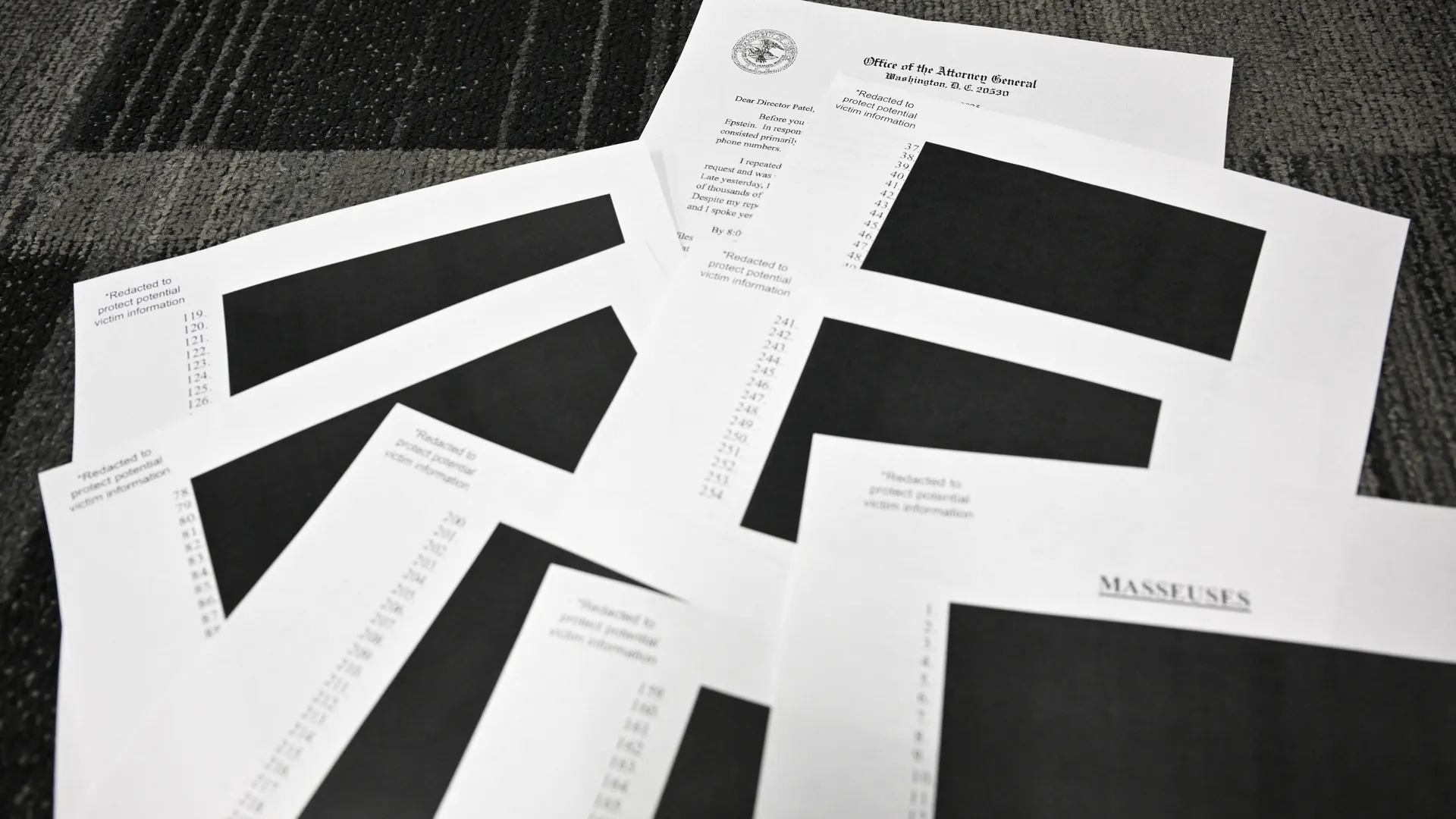
    What I’m talking about are the things that actually appear in the record: emails sent to or from Jeffrey Epstein and Ghislaine Maxwell, sworn testimony from victims given under penalty of perjury, and other evidence that investigators have said could support criminal cases, such as photographs, videos, and documentation of trafficking operations.

    Reading about these details is deeply disturbing.

    This isn’t about people having unconventional sex lives or engaging in consensual adult kink. Adults are free to live their lives however they choose. What the Epstein case reveals is something very different: the exploitation of young girls (some reportedly prepubescent or barely pubescent) by powerful people who treated them as disposable.

    These were vulnerable teenagers manipulated, trafficked, and abused by individuals with enormous wealth and influence. And for years, the systems that were supposed to protect them largely failed. It forces an uncomfortable question: what happens when immense wealth and power operate without meaningful accountability? The Epstein scandal suggests that the answer is often ugly.

    When people have the money, connections, and influence to shield themselves from consequences, the worst impulses can flourish. In that sense, Epstein was not a supernatural villain or some once-in-a-generation monster. He was something more troubling: a symptom of a system where wealth and power can insulate people from the laws and moral standards that govern everyone else.

    In many ways, Epstein functioned like a high-end pimp by providing powerful clients access to things they should never have been able to obtain. And our culture has sometimes romanticized that figure. For decades, entertainment media have portrayed pimps as rebellious anti-heroes rather than as people who often exploit vulnerable women and girls.

    The Epstein case strips away that mythology. It shows the brutal reality behind it.

    But the truth is that the problem isn’t limited to one man or one network. We’ve seen similar patterns in other high-profile abuse cases involving celebrities, entertainers, and powerful figures. Wealth, fame, and influence often create environments where victims struggle to be believed, and perpetrators expect to avoid consequences.

    That realization forces a level of personal reflection as well.

    Like many people, I can admit that in the past I sometimes dismissed or minimized allegations against powerful men whose work or status I admired. When people joked about or rationalized the abuse of young women by famous figures, it was often treated as scandalous gossip rather than as evidence of serious harm.

    Looking back, that culture of dismissal helped create the conditions where victims were ignored, and predators were protected.

    The Epstein files are horrifying not only because of what they reveal about specific crimes, but because they expose how systems of power operate. They show how wealth, status, and influence can warp justice itself.

    And that is why the response to this scandal matters.

    Justice should not depend on a person’s political ideology, social status, or connections. Anyone who participated in exploitation or trafficking (no matter how rich or powerful) should face real accountability.

    The victims deserved protection when these crimes were happening. The least society can do now is ensure that the truth is pursued seriously and that those responsible are held accountable.