Every so often in public conversations about race, someone will attempt to discredit a person’s arguments by accusing them of hatred or extremism that they never expressed. This tactic usually relies on exaggeration, misrepresentation, or outright fabrication.
Recently, someone repeatedly accused me of calling for genocide against white people. This is an accusation that is not only false but absurd.
Let me be clear about something.
I will never apologize for being pro-Black. I will never apologize for identifying as a Pan-Africanist, and I will never apologize for calling out anti-Black racism wherever I see it. Advocating for the dignity, safety, and advancement of Black people does not require hostility toward anyone else.
But I do care about being truthful about what I believe.
I do not hate white people. What I oppose, firmly and unapologetically, is the ideology and practice of white supremacy. Those two things are not the same.
White supremacy is a political and social system that places one racial group above others. It has shaped laws, institutions, and cultural narratives throughout much of modern history. Criticizing that system is not an attack on individual white people; it is a critique of a structure of power and inequality.
In fact, many of the people who helped shape my life in positive ways have been white.
Throughout my life, white friends, mentors, and supporters have offered encouragement, assistance, and opportunities when I needed them most. Some believed in me when I did not believe in myself. Others provided support during moments when I was struggling personally and emotionally.
Those experiences are part of my life story, and they make it impossible to honestly claim that I hate white people.
At the same time, acknowledging those personal relationships does not mean ignoring the reality of racism. Structural racism and discriminatory narratives continue to shape how people of color, especially Black Americans, are perceived and treated in many areas of society.
Recognizing that reality is not hatred. It is an observation.
Just as individuals and communities should be willing to confront sexism, homophobia, ableism, or other forms of discrimination, societies must also be willing to confront racism honestly. Criticism of injustice is not the same as prejudice against a group of people.
Too often, accusations of “reverse racism” or extreme hostility are used as rhetorical shields to avoid confronting difficult conversations about race and inequality.
But refusing to acknowledge racism does not make it disappear.
Advocating for justice, dignity, and equality for Black people does not require hostility toward other groups. It simply requires honesty about history, power, and the realities that many people still experience.
Being pro-Black is not about hatred. It is about refusing to remain silent in the face of injustice.
Modern political debates often reduce complex historical events to simple partisan talking points. One of the most common claims is that the Civil Rights Movement and the landmark civil rights legislation of the 1960s were primarily the achievement of conservative Republicans.
This claim is frequently used in contemporary political arguments, but it oversimplifies a far more complicated historical reality.
It relies on several incorrect assumptions:
The Republican Party has always been a party of fiscal, social, and small-government conservatives.
American political parties historically operated as unified ideological blocs rather than coalitions containing both liberal and conservative wings.
Republicans were never involved in segregationist politics, white supremacist movements, or anti-Black rhetoric and policies.
All three assumptions are historically inaccurate.
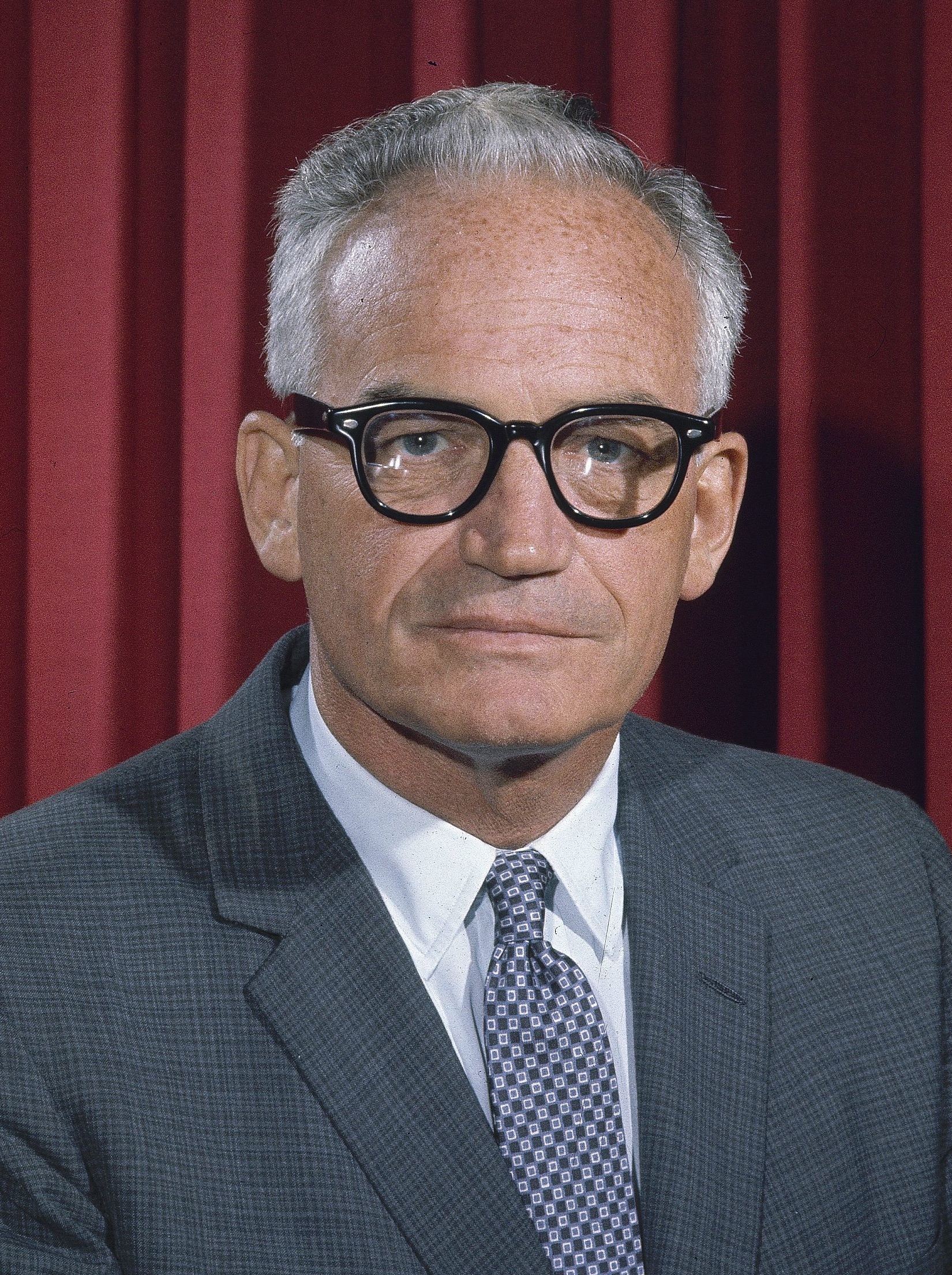
In the decade following the Civil War, Republicans championed early civil rights legislation during Reconstruction. However, after the contested election of 1876 and the Compromise of 1877, which effectively ended Reconstruction, national political commitment to protecting Black civil rights declined dramatically.
During the late nineteenth and early twentieth centuries, what historians often call the Nadir of American Race Relations (roughly 1887–1923), racist policies and segregation became entrenched across much of the United States. During this period, many politicians from both major parties adopted or tolerated segregationist attitudes.
Fast forward to the 1960s and the passage of the Civil Rights Act of 1964.
The legislation was originally proposed by President John F. Kennedy (D) in 1963. After Kennedy’s assassination, President Lyndon B. Johnson (D) made the bill a central priority of his administration and pushed aggressively for its passage.
Several key members of Congress played major roles in advancing the legislation, including:
Hubert Humphrey (D–MN)
Emanuel Celler (D–NY)
Everett Dirksen (R–IL)
William McCulloch (R–OH)
The final legislation was the result of bipartisan cooperation, though it was strongly driven by the Democratic administration and several Democratic leaders in Congress.
The final vote totals were:
House of Representatives 289–126 (70–30%)
Senate 73–27
When broken down by party, the numbers appear to show stronger Republican support:
House
Democrats: 153–91 (69%)
Republicans: 136–35 (82%)
Senate
Democrats: 44–23 (66%)
Republicans: 27–6 (82%)
At first glance, these numbers might suggest that Republicans were the primary supporters of civil rights legislation.
However, this interpretation ignores a crucial factor: region.
When the votes are separated by region, a very different pattern appears.
House of Representatives
Northern members: 281–32 (90%) in favor Southern members: 8–94 (8%) in favor
Senate
Northern members: 72–6 (92%) in favor Southern members: 1–21 (5%) in favor
In other words, the major divide was not simply party affiliation—it was North versus South.
Looking at the votes by both region and party makes this even clearer.
House
Southern Democrats: 8–83 (9%) in favor Southern Republicans: 0–11 (0%) in favor
Northern Democrats: 145–8 (95%) in favor Northern Republicans: 136–24 (85%) in favor
Senate
Southern Democrats: 1–20 (5%) in favor Southern Republicans: 0–1 (0%) in favor
Northern Democrats: 45–1 (98%) in favor Northern Republicans: 27–5 (84%) in favor
Not a single Southern Republican voted for the Civil Rights Act of 1964. Meanwhile, Northern Democrats supported the bill at even higher rates than Northern Republicans.
Another important point often overlooked in modern political debates is that Democrats held large congressional majorities during this period.
In the 88th Congress (1964), Democrats held:
66 seats in the Senate
253 seats in the House
Without substantial Democratic support, the Civil Rights Act simply would not have passed.
A similar pattern appeared in the Voting Rights Act of 1965. At that time, Democrats held even larger majorities:
68–32 in the Senate
295–140 in the House
The final votes were:
House 333–85
Senate 77–19
Again, both parties supported the legislation. But the historical record shows that the outcome cannot be reduced to a simple narrative about one party single-handedly delivering civil rights.
The reality is more complex.
Civil rights legislation in the 1960s passed through bipartisan coalitions, but those coalitions were shaped far more by regional politics and ideological divisions than by party labels alone.
Reducing this history to a partisan talking point oversimplifies one of the most important political struggles in American history.
One of the most common talking points used in online debates about race and crime is the so-called “13/50” statistic. The claim is frequently repeated by people attempting to justify racist narratives about Black Americans and criminality.
But statistics, when presented without context, can easily be used to mislead.
The “13/50” argument relies on the selective interpretation of crime statistics, particularly FBI arrest data. It highlights the overrepresentation of Black Americans in certain categories of arrests, especially homicide and robbery, while ignoring the broader context of crime statistics and how those numbers are interpreted.
For example, according to the U.S. Census Bureau, white Americans (white alone) make up roughly 60 percent of the U.S. population. When looking at FBI arrest data, however, white Americans account for large majorities in many categories of crime.
Using the same FBI tables often cited in online debates, white Americans account for:
82% of DUI arrests
75% of sex offense arrests (excluding rape)
74% of vehicle theft arrests
72% of drug abuse violation arrests
70% of rape arrests
68% of burglary arrests
67% of property crime arrests
66% of arrests for offenses against family and children
65% of simple assault arrests
62% of aggravated assault arrests
62% of arrests for possession of stolen property
Overall, white Americans account for roughly 69 percent of all arrests, a number that exceeds their share of the population.
None of this means that crime patterns should be ignored, or that certain communities do not face serious challenges related to violence and crime. Black Americans are indeed statistically overrepresented in some categories of arrests.
But simply presenting one statistic without context does not explain why those patterns exist.
Crime statistics are shaped by many factors, including poverty, neighborhood segregation, historical inequality, policing patterns, economic opportunity, and social conditions. Reducing complex social problems to a single racial statistic ignores these realities and turns data into a political weapon.
This is why statistics must always be interpreted carefully.
Numbers can illuminate reality, but they can also be manipulated to reinforce existing prejudices. Selective data presentation allows people to construct narratives that appear objective while still serving ideological agendas.
The goal of examining these statistics is not to deny problems within any community, nor is it to portray any racial group as inherently criminal or morally inferior.
Rather, the point is to demonstrate how easily statistics can be used to construct misleading narratives.
When numbers are stripped of context and deployed as political talking points, they stop being tools of understanding and become instruments of propaganda. This is why Charlie Kirk wasn’t an objective truth teller. He was a racist but skillful manipulator of facts.
Understanding crime, inequality, and social policy requires more than slogans and selective data. It requires an honest analysis of the underlying conditions that shape those numbers in the first place
Why American culture has always been a cultural fusion.
In recent years, the word “culture” has increasingly become a coded talking point in political debates about immigration and national identity. Some commentators claim that the United States was founded on a supposedly pure “Anglo-American culture” that must be protected from outside influence.
The problem is that this idea collapses under even basic historical scrutiny.
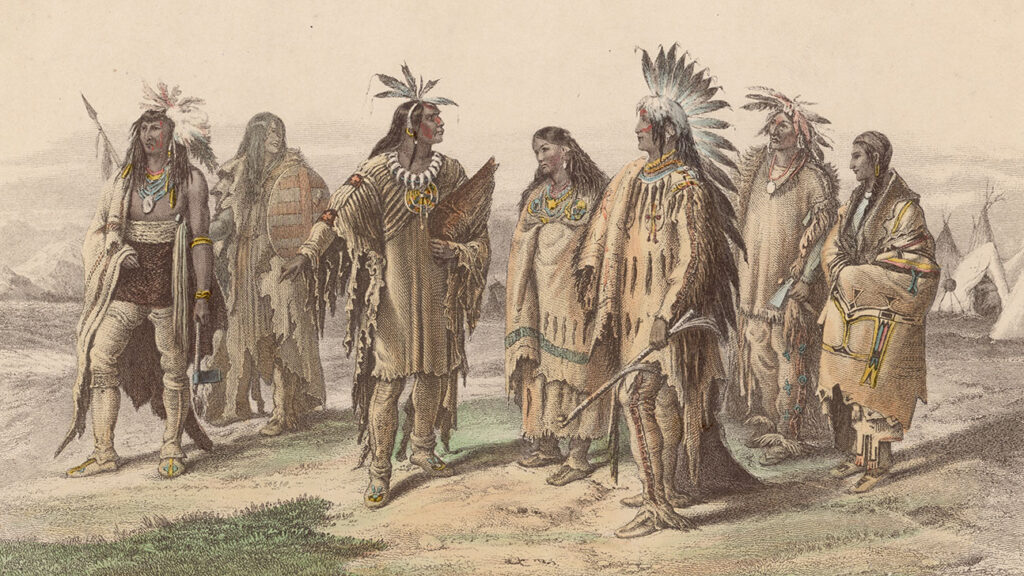
From its very beginning, the United States was not the product of a single culture. It emerged from the interaction of many peoples: Native Americans, Europeans from multiple nations, and Africans brought through the transatlantic slave trade. What developed over time was not a uniform tradition but a cultural fusion.
Even the political ideas behind the United States were influenced by multiple traditions. The Magna Carta is often cited as an inspiration for American constitutional principles, but historians have also noted the influence of the Iroquois Confederacy’s Great Law of Peace on early American political thought.
The Iroquois Confederacy’s Great Law of Peace was one of the inspirations for the Constitution of the United States
The same cultural blending appears throughout everyday American life.
Many foods commonly associated with European cuisine actually originated in the Americas. Crops such as corn, potatoes, and tomatoes, and meats such as turkeys were unknown in Europe before the Columbian Exchange. Today, these foods are staples in dishes that people often assume are traditionally European.
American music tells a similar story. Genres that many people associate with “white” American culture (such as country, bluegrass, and rock) developed from the interaction of African instruments and musical traditions with European instruments and folk styles. Even square dancing reflects this cultural exchange.
The English language as spoken in the United States also reveals the depth of these influences. Many common words come from Native American languages. Animals such as moose, coyote, and skunk all derive their names from Indigenous sources. Other words, such as banjo, banana, cola, yam, and goober, entered English through African languages.
This pattern is not unique to the United States. Cultural mixing has shaped societies throughout history.
The culture of the modern United Kingdom, for example, developed from layers of migration and conquest. The British Isles were shaped by the interactions of Celtic peoples, Romans, Anglo-Saxons, Vikings, Normans, and others. Each group influenced the culture that followed.
The same dynamic occurred in the United States.
Throughout American history, waves of immigrants from Ireland, Germany, Italy, Poland, China, Japan, Mexico, and many other places have contributed to the country’s evolving culture. Each group added elements that eventually became part of what we now recognize as American life.
Even in the colonial period, there was no single “Anglo-American” culture. Colonial societies differed dramatically from region to region. New York began as a Dutch colony before the British took control. Pennsylvania attracted Quakers and later large numbers of Catholics. Delaware was originally settled by the Swedes. Cultural diversity existed from the very beginning.
This is why the claim that America must preserve a single “Anglo-American culture” is historically misleading. American culture has never been static, and it has never belonged to just one group.
It has always been shaped by the interaction of many peoples and traditions.
The United States will continue to evolve as people from places such as Nigeria, Honduras, Haiti, Nepal, and Fiji make their lives here. That evolution is not a threat to American culture. It is how American culture has always developed.
No culture remains frozen in time. The story of American culture, like the story of every nation, is one of constant change.
How misleading statistics distort the history of American slavery
One of the most commonly repeated talking points in discussions about American slavery is the claim that “only about 2% of white Americans owned slaves.” Technically, the statistic isn’t entirely false. Historical records show that roughly 1.4% of white Americans were listed as the legal owners of enslaved people in 1860.
But that statistic is also deeply misleading.
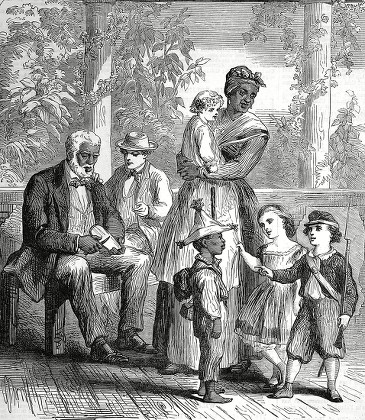
The problem is that slave ownership was not simply an individual arrangement. It was a household institution. When a person legally owned enslaved people, everyone in that household benefited from and exercised authority over them. A slave owned by the father of a family was effectively under the control of the entire household: the wife, the children, and anyone else living on that property.
This is the same reason that car ownership statistics in the United States are often measured by households rather than by individuals. A car may be registered in one person’s name, but the entire household typically has access to it.
When historians measure slave ownership by households rather than individuals, the numbers change dramatically.
By 1860, nearly 10% of all white families in the United States owned enslaved people.
The concentration of slave ownership in the South makes the numbers even more striking. In that same year:
About 25% of white families in the South owned slaves.
In the states that would form the Confederacy, the number rose to 31%.
In South Carolina, approximately 46% of white families owned enslaved people.
In Mississippi, the number was roughly 49%.
These figures reveal that slavery was not an obscure or marginal institution. In many parts of the South, it was a central feature of society.
And even these numbers do not fully capture the scale of the system.
The entire Southern economy was built around slavery. Many people who did not personally own enslaved individuals still profited from the institution. Slave catchers were paid to hunt down escaped slaves. Blacksmiths manufactured shackles and restraints. Insurance companies sold policies on enslaved people as property. Enslaved laborers were often rented out to families or businesses that did not technically own them.
The percentage of white households that benefited economically from slavery was almost certainly much higher than the percentage that legally owned enslaved people.
So why does the “2% statistic” get repeated so often?
Because it serves a political purpose.
In many contemporary debates about race and history, some commentators attempt to minimize the responsibility of white Americans for the system of chattel slavery. They frequently redirect attention toward African kingdoms that participated in the transatlantic slave trade, or they argue that slavery existed throughout the world, implying that American slavery was not particularly unique.
But chattel slavery in the Western Hemisphere was fundamentally different from many earlier forms of slavery. It was racialized, hereditary, and legally defined as permanent property ownership over human beings.
Another frequently overlooked fact is that the vast majority of enslaved people in the United States were not directly imported from Africa.
By the nineteenth century, most enslaved people in the United States had been born into slavery within the country itself. Historians estimate that only about 4–6% of enslaved people in the history of the United States were directly imported from Africa. By 1860, the overwhelming majority of enslaved people were the descendants of earlier enslaved populations.
This means that the American slave system was sustained largely through the forced reproduction and exploitation of enslaved families within the United States.
None of this means that every white American owned slaves. In 1860, there were 33 states in the United States, and slavery was legal in only 15 of them. Many white Americans lived in free states or did not own land or enslaved laborers.
But minimizing the scale of slavery—or the extent of public support for it—distorts the historical record.
Slavery persisted not simply because of a small group of wealthy plantation owners, but because large segments of Southern society supported and defended the institution politically, economically, and culturally.
Even families who did not personally own enslaved people could still support slavery by voting for pro-slavery politicians, working in industries that sustained the slave economy, serving as overseers or slave catchers, or fighting for the Confederacy during the Civil War.
Statistics without context can obscure more than they reveal.
The claim that “only 2% of whites owned slaves” may sound like an attempt to shrink the scale of responsibility. But when examined more closely, the historical reality shows that slavery was deeply embedded in the social, economic, and political life of the United States.
Despite how the gaggle of goofy, gaumless, good-for-nothing goobers on the other side of the political spectrum keep straw-manning the position of those of us on the left side of the political spectrum (liberals, progressives, and leftists), most of us do not desire, nor are we advocating for, completely open borders. We don’t want foreign criminals in this country, we don’t want terrorists to enter this country easily, and we don’t wish to ruin our national ecology through the unchecked introduction of invasive species of plants, animals, fungi, and diseases. These are some of the reasons why borders exist and why they are regulated.
However, we do not want to excuse or promote xenophobic ideas and policies. We do not engage in the wholesale demonization of segments of people because we find their looks, fashion, customs, diets, religions, or whatever too foreign for our tastes. We are not holding on to a fictionalized notion of the United States being the product of one dominant, default, and exemplary culture, devoid of any influence of the various other people who contributed to the cultural, intellectual, and economic capital of this melting pot and/or mosaic of a nation.
In other words, many other people and I on the political left welcome immigrants, visitors, and migrants from all over the world, from different walks of life, whether from a developing country or from a wealthy, advanced, and developed nation. If we are indeed that “shining city on a hill” that Ronald Reagan talked about in his 1989 farewell address, then we would like to share our freedom, prosperity, opportunities, culture, and technology with people from the rest of the world who yearn for the freedom, opportunity, and prosperity that somehow eluded them in their home countries and that our nation can provide. After all, this is a country of mostly colonizers, enslaved or indentured labor, and immigrants living on the stolen ancestral land of the collective victims of one of the worst genocides in human history. I don’t say this to be facetious, contrarian, indignant, or self-righteous. That is not my point. I say this to illustrate that if there were a rigid enforcement of borders 400 years ago, the only people that would be here are those currently mostly forgotten people who make up 1% – 2 % of the population, many living in conditions worse than those of the urban slums that my people complain about, and who are routinely mistaken for foreigners themselves in some very disturbing twist of irony.
The truth is that immigrant populations add to our overall economic prosperity. They are usually leaders in the various past innovations that made this country technologically advanced and prosperous. These people include Alexander Graham Bell, Albert Einstein, Nikola Tesla, Levi Strauss, and many others from various parts of the world (I focused more on the names that most people know). A study published by the Cato Institute a few days ago stated that immigrants paid trillions of dollars more in taxes than they received in benefits from 1994 to 2023. According to another study from 2024 by the Institute on Taxation and Economic Policy (ITEP), UNDOCUMENTED IMMIGRANTS alone paid close to $100 billion in federal, state, and local taxes in 2022. Most of that money went towards federal taxes (over 60%). This is money that they cannot receive in individualized social welfare programs like food stamps due to their immigration status.
Despite the things that you’ve heard from your xenophobic family members, friends, and/or neighbors, despite what you watched on poorly produced internet documentaries with questionable methods, drawing unethical conclusions, and despite the cynical demagoguery of conservative (and some liberal) politicians, political pundits, and social media content creators, immigrants aren’t fleecing this country like hordes of swarming locusts or being given more opportunities and business loans than native born Americans. I already argued on how the former isn’t true, now the latter.
According to an article by NBC News, immigrants have higher rates of entrepreneurship than native-born Americans. Yet immigrants get rejected for business loans at rates higher than their native-born counterparts. This is according to small business loan statistics from the Bankrate website. It is tougher to get grants and other benefits from the government if you are an immigrant.
So why are there so many immigrant businesses? Immigrants usually have more of an entrepreneurial drive than native-born Americans. Having personally traveled to underdeveloped nations and spent time there, I saw firsthand how many people were forced to be creative to make money because the number of good-paying jobs was limited, along with the prospect of post-secondary education (education after high school). I saw people running small stores, barber shops, beauty salons, and restaurants out of their homes.
According to the Cato Institute, immigrant groups consume and spend less than native-born Americans and rely less on credit. This is because the availability of credit is relatively low in their home countries. Thus, people have to save their money to buy homes, cars, or start businesses. They learn to do more with less while deferring their gratification until a later time.
The answer to our immigration problems is not to trample all over our Constitution, one of the things that make this country special, to criminalize and commit acts of state-sponsored terrorism on people whose only crime was to leave the homes that they love due to desperation. Nor should we force adherence and assimilation into American values that are approved by only a small section of Americans who feel that their childish jingoism, denial, and hiding of uncomfortable historical facts and occurrences is the only way to truly “love” America. Their narrow-minded ideas of love, patriotism, and American culture are laughably juvenile and display a sickening self-aggrandizing narcissism. The fact that they perform this horrid bigotry in the name of Christianity is one of the biggest affronts and stains on our image. I personally don’t care whether individuals or groups of immigrants adopt a conservative philosophy or a progressive one. It doesn’t matter to me. All I care about is whether they are actively trying to harm the people of this country over grievances that have little to do with them, besides being a part of the propagandized masses being indoctrinated by political, business, and media interests. Acts of terrorism by foreign actors don’t make things better. They make them worse.
Those of us on the left are not asking for chaos or lawlessness at the border. What we want is an immigration system that is humane, rational, and consistent with the constitutional principles that make this country worth defending in the first place. Citizenship should not require people to navigate an unnecessarily cruel maze of bureaucracy, spend enormous sums of money, or prove their loyalty by parroting a narrow and childish form of jingoism.
Patriotism in a democratic society cannot mean blind obedience to a single vision of what America is supposed to be. The right to criticize, challenge, and improve our country is exactly what separates the United States from the authoritarian governments many immigrants are fleeing. If you truly love this country, then you should understand why people around the world see it as a place of opportunity and refuge. Welcoming those who seek freedom and a better life is not a betrayal of American values. It is one of the clearest expressions of them.
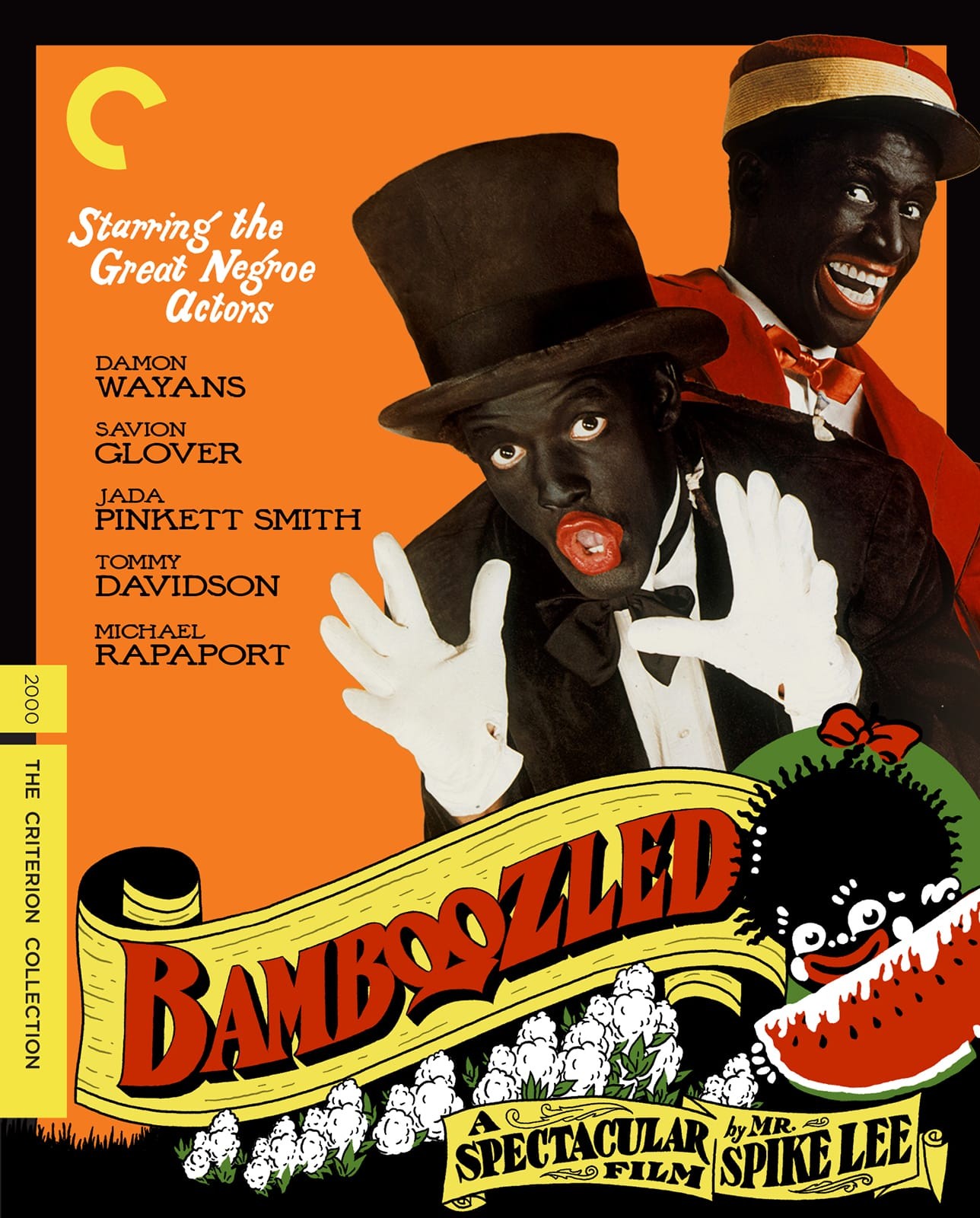
In 2000, Spike Lee was already a household name and a well-respected writer and director. He had already directed 12 movies by this time. These were She’s Gotta Have It (1986), School Daze (1988), Do the Right Thing (1989), Mo’ Better Blues (1990), Jungle Fever (1991), Malcolm X (1992), Crooklyn (1994), Clockers(1995), Girl 6 (1996), Get on the Bus (1996), He Got Game (1998), and Summer of Sam (1999). Although the relative box office success of his movies from the late-1980s through the mid-1990s was already waning from Crooklyn onward during this time, his movies were still critically acclaimed, and his artsy filming and unapologetic and unafraid attitude on tackling subject matters that many other writers and directors were afraid to tackle, gave the studios and Hollywood as a whole, artistic legitimacy.
Spike Lee’s 13th movie, Bamboozled, a satirical comedy movie about the embedded racism of the entertainment media (particularly in television) along with society, did poorly at the box office and confused and even angered many people who initially watched it. Some critics, when it was released in 2000, thought that it was too shockingly heavy-headed. Roger Ebert thought that the use of blackface was too over-the-top and made the movie and its jokes more shocking than they were funny. I think that it was because of the initial shock of the use of blackface and the imitation of minstrel shows of a past in entertainment and media that is still very hurtful to black people and an embarrassment for whites, most audiences elected not to watch the movie at all.
A funny thing happens with time, though. The movies that few people wanted to watch in theaters develop a cult following later. These movies are lauded and appreciated by those who understand and appreciate the messages, the humor, and the artistic decisions that made these movies the bane of audiences and critics when they were initially released. This is what happened with movies like John Carpenter’s The Thing (1982). I will admit that although I barely knew anything about the movie before and during its theatrical release, I would often pass it by when trying to rent movies at Blockbuster. The cover art with the old school minstrel caricatures made the movie repulsive to me initially. It wasn’t until years later, seeing it on a streaming service, that I watched the movie after buzz about it on the internet, particularly on social media. I suspect that many people watched the movie via streaming services like Netflix. After giving the movie a chance, I could see the message of Spike Lee’s reimagining of old school, in-your-face minstrel shows, and parallel that with the more contemporary stereotypical media depictions and capitalizing on them.
A Brief History of Minstrel Shows
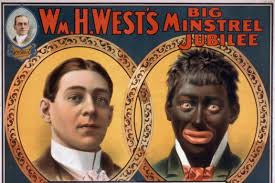
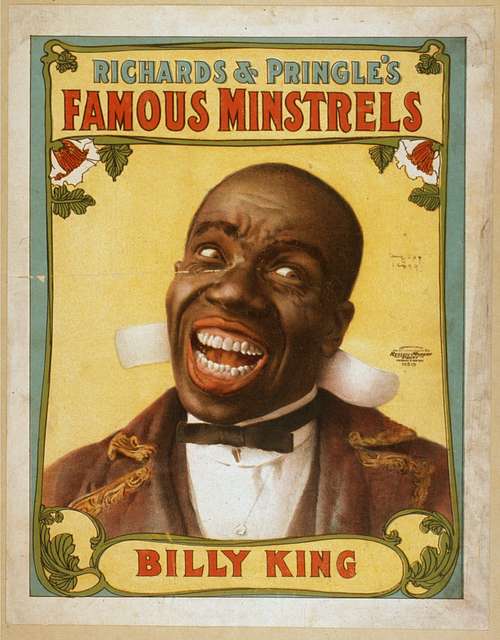
Example of blackface in minstrel shows.Even black performers participated in minstrel shows. Sometimes, it was the only work that they can find as performers.
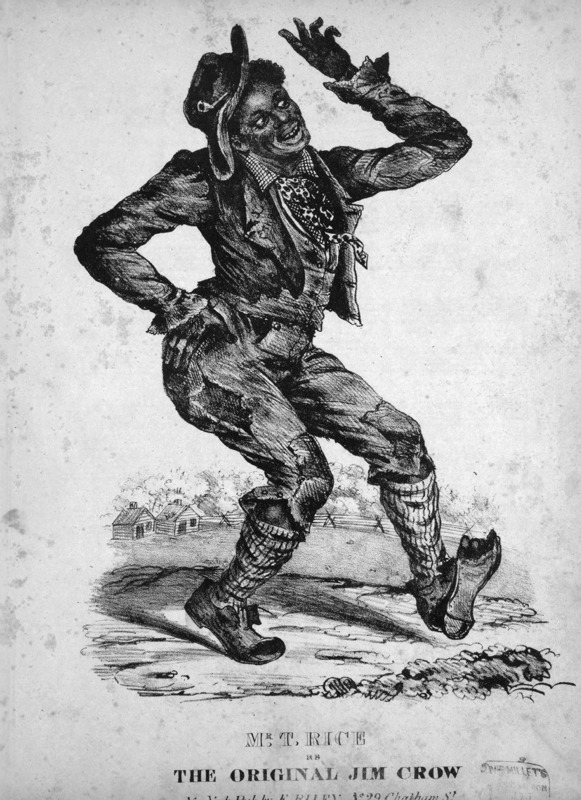
The minstrel show tradition officially began with the song and dance performance of Thomas Dartmouth “Daddy” Rice, who performed as a stereotypical character, Jim Crow, in 1828 as part of a variety show. The song “Jump Jim Crow” would become a national sensation, especially in the Northern United States, where minstrelsy would become more popular than in the Southern United States. Thomas Rice would perform the character in blackface. Jim Crow was a character that Rice created who was a black, physically disabled stablehand who walked with a limp and would do a shuffling, hopping dance.
Poster for Jim Crow
The character became very popular and spawned many more white people in blackface performing stereotypes of dim-witted, lazy, and content slaves. Increasingly, more variety shows included blackface performances. By the 1840s, shows started to be entirely in blackface. For the next five decades, minstrel shows would be the most popular form of entertainment in the United States. The Jim Crow character’s name would later be used to categorize laws that were meant to keep black people in subservient positions, as second-class citizens, and as victims of an American form of apartheid after slavery ended in 1965.
The “Disappearance” of the Minstrel Show
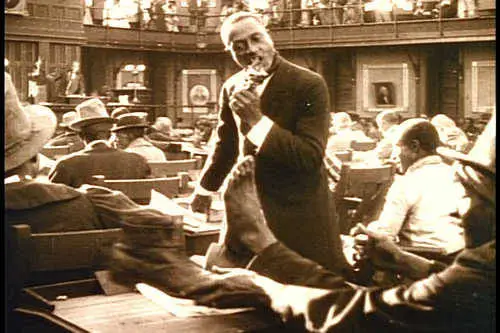
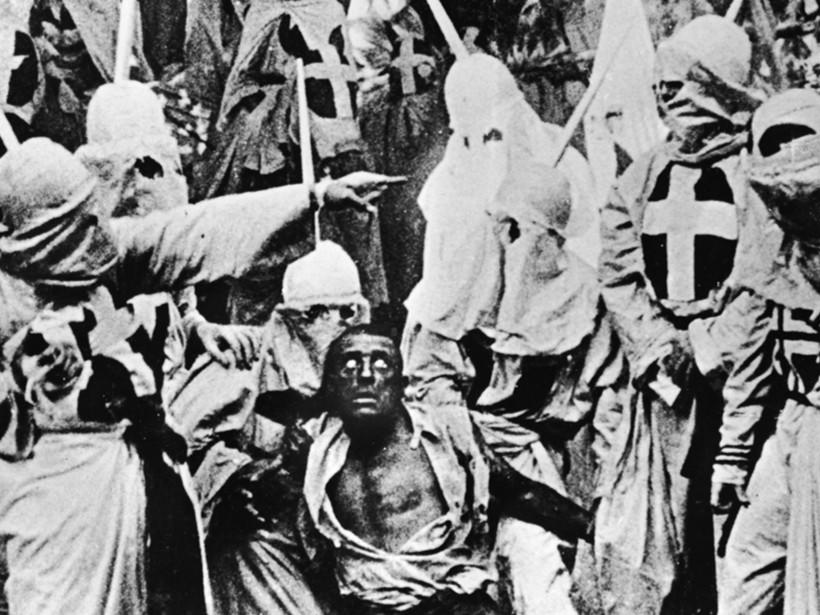
It can be argued that minstrelsy didn’t completely go away after the mid-20th Century when it seemed to disappear (around 1960). Stage shows weren’t as popular as they used to be as movies and television became popular media in which people mostly got their entertainment. In the beginning of the 20th Century and even with the new media, aspects of the minstrel show remained. D. W. Griffith’s The Birth of a Nation (1915) employed many of the tropes used in the minstrel shows on the stage. It had white actors in blackface and actual black people performing stereotypical roles. Its popularity and message resurrected a Ku Klux Klan (KKK) that was dead over 40 years before this and would make it one of the most popular political organizations of the 1920s and 1930s, with members of both major political parties having membership and being influenced by the terroristic organization.
The Birth of a Nation (1915) showed the majority black state governmental bodies as disorganized, undignified, and corrupt, and the black people in them as uncivilized.A white man in blackface, who acted as one of the antagonists in The Birth of a Nation (1915), is seen being “brought to justice” (about to be lynched) by the Klansmen who were the “heroes” of this movie.
However, a new stereotype would arise that would be more dangerous than that of the childlike buffoonish “coons” and/or “sambos” of earlier minstrelsy. Starting in literature, the “black brute” trope would appear. This trope painted black men as animalistic predators who stalked white women to rape. Whereas the “sambo” stereotype was used to justify the perpetual enslavement of black people, the “black brute” stereotype was used to justify the systemic murder and second-class citizenship of black people. It is no accident that these stereotypes became popular during the time period in the United States in which anti-black lynchings were the most active (1880s – 1920s). This stereotype would not go away. Instead, it will later dominate other negative stereotypes of black men.
The classic coon, mammy, and pickaninny tropes employed by minstrel shows would be seen in early movies and shorts. The Three Stooges would use them in scenes with black domestic or service workers. The black characters in the Our Gang (The Little Rascals) series were modeled after the pickaninnies of minstrel shows. Early cartoon characters like Mickey Mouse, Bugs Bunny and Felix the Cat were modeled after minstrel shows and would even sing minstrel songs in the shorts. Imitation of Life (1934) was full of the “mammy” character, Delilah Johnson, saying the most cringe-worthy anti-black things while pledging her undying loyalty to the white character, Beatrice Pullman. The biggest black stars of the early 20th Century, after movies had sound, were William (Willie) “Sleep ‘n’ Eat” Best and Lincoln Theodore Monroe Andrew “Stepin’ Fetchit” Perry.
More dignified and human black characters in mainstream Hollywood would come in the late 1940s. But minstrel characters would persist. In 1951, The Amos ‘n’ Andy Show premiered. The show was a live-action television sitcom based on the minstrel radio show by the same name. The show was a television hit and lasted all the way until 1960. This is the official end of the minstrel show.
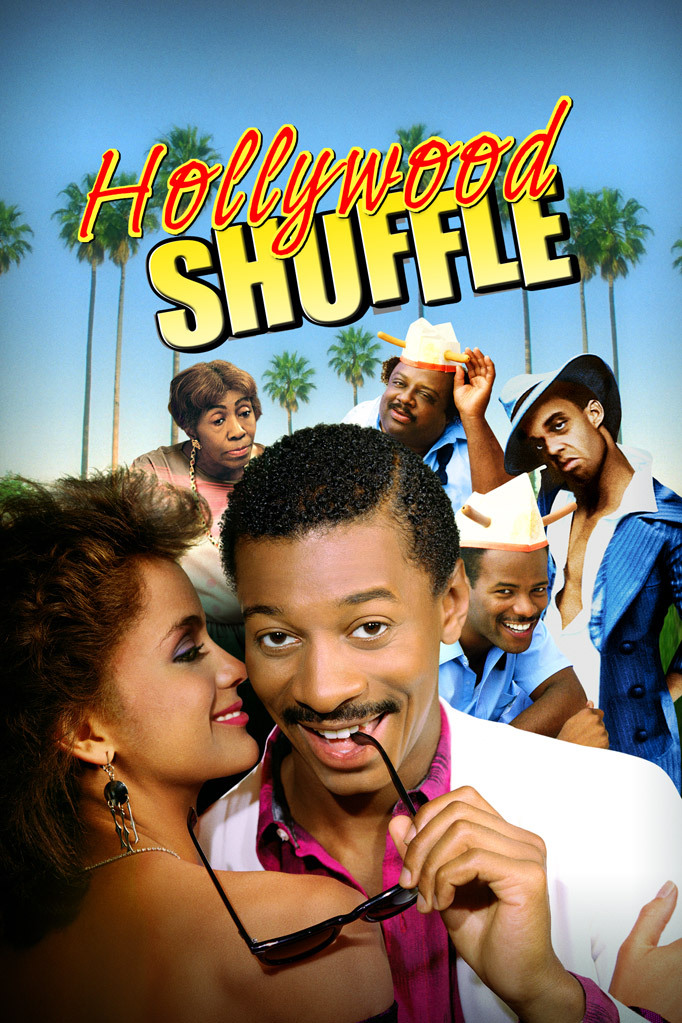
However, many of the most harmful aspects of the minstrel show would survive to this day through 1970s blaxploitation films, the popularity of James “JJ” Evans Jr. in the show Good Times, gangsta rap music and videos, many Tyler Perry movies, and various other popular forms of American entertainment. In fact, it is the persistence of these tropes and stereotypes in popular media, especially movies, that spawned Robert Townsend’s first movie, Hollywood Shuffle (1987). Hollywood Shuffle is a spiritual prequel to Bamboozled in many ways.
Movie poster for Hollywood Shuffle (1987)
A reimagined alternative to a current social condition
In Bamboozled, Spike Lee imagines a television network in which minstrelsy wasn’t just hidden and denied but accepted and made into a hit television show. It was the product of irresponsible capitalism that cares more about profits and the illusion of diversity than any sense of responsibility towards the community. The black caricatures are packaged and presented to mixed audiences as ironic or edgy humor while corporate executives monetize disturbingly grotesque racial spectacle, and black writers, directors, actors, producers, and crew are financially and professionally trapped in a system that greatly rewards self-exploitation. In this imagining, media is a direct descendant of the minstrel tradition and never broke from it. Society is not in a post-racist era; we are just in a more polished one.
Escaping this unfortunate reality requires systemic changes. The problems in Bamboozled are not due to changes in technology, nor will they be fixed with technology. Instead, what must be done is that the power structure must change. Modern art is profit-driven and controlled by capitalistic corporations. Capitalism rewards spectacle over dignity. This is what you experience when watching daytime talk shows featuring lie detectors and paternity tests or when listening to Sexy Redd songs. The ratings, box office receipts, album sales, and other metrics justify any moral compromise by the corporation. And most of the executives who control the distribution of art are white, so they have no sense of responsibility towards the black community, especially the poor and working-class black community.
In the movie, CNS television network is run by white people who have final say in the content that they put on air. The audiences love Mantan: The New Millennium Minstrel Show and CNS makes sure to protect itself from any charges of racism by making sure that that everyone from the cast to the crew is black. There is a scene in the movie in which Myrna Goldfarb the PR Consultant in CNS, a white woman, gives the “Mantan Manifesto” to shield the company from any scrutiny, criticism or charges of racism. It is as follows:
“Gainfully employ African Americans in front of and behind the camera.”
“Let the audience decide.”
“Who are these would-be ‘cultural police’?”
“Who determines what is Black? We are not saying anything about the entire African American community.”
“This is simply satire.”
“If they don’t like it, ‘F-‘em!’ ”
“And lastly, always smile, wear kente cloth, reference Dr. King, and remember, this show was created by a non-threatening Black male.”
The cynical way in which heavy and much-needed conversations about racist portrayals, racism, and responsibility, while hiding behind the positive public relations of black employment and opportunity, makes this manifesto even more insidious.
Spike Lee suggests that the things to do to escape this condition are to have changes in media ownership and governance. . This is not explicitly articulated; rather, it is conveyed implicitly. The issue was that everyone over Pierre Delacroix (whose real name is Peerless Dothan and the main protagonist of the movie) is white and feels no connection or responsibility towards the black audience that they are trying to capture and build on. They didn’t care if the show helped or harmed the community. The only thing they cared about was the ratings. However, simply putting black faces in seats of power in a company will not lead to any fundamental and/or significant changes if the overall economic model rewards racial exploitation. So, a big part of reform is to go with a model that doesn’t. Also, there would have to be reform when it comes to cultural gatekeeping.
The Legacy of Minstrelsy Lives On
Bamboozled is more appreciated today than it was when it was first released over a quarter of a century ago. The film is seen today as less absurd and more prophetic in the same vein as Network (1976). In 2023, the movie was selected for preservation in the Library of Congress National Film Registry. Although the film used the over-the-top idea of a modern-day minstrel show fashioned in the same manner as minstrel shows of the past, the message of the movie resonates more now than it did when it was initially released.
Online, content is measured by engagement metrics that reward outrage and caricature, and viral culture spreads and monetizes stereotypes. Black “trauma porn” is still very popular, and black pain and spectacle still generate profit. Today, many black content creators upload videos of themselves engaging in “coonery [and] buffoonery” (to quote Spike Lee himself) for clicks. Many of them are either being anti-black contrarians or engaging in hyper-performative racialized personas for algorithmic gain, mostly for the popularity and approval of non-black audiences. Both online and on television, corporate brands use black culture for capitalistic endeavors while avoiding structural change. Diversity is treated more like a public relations project and less like a way to redistribute power and ownership in the media.
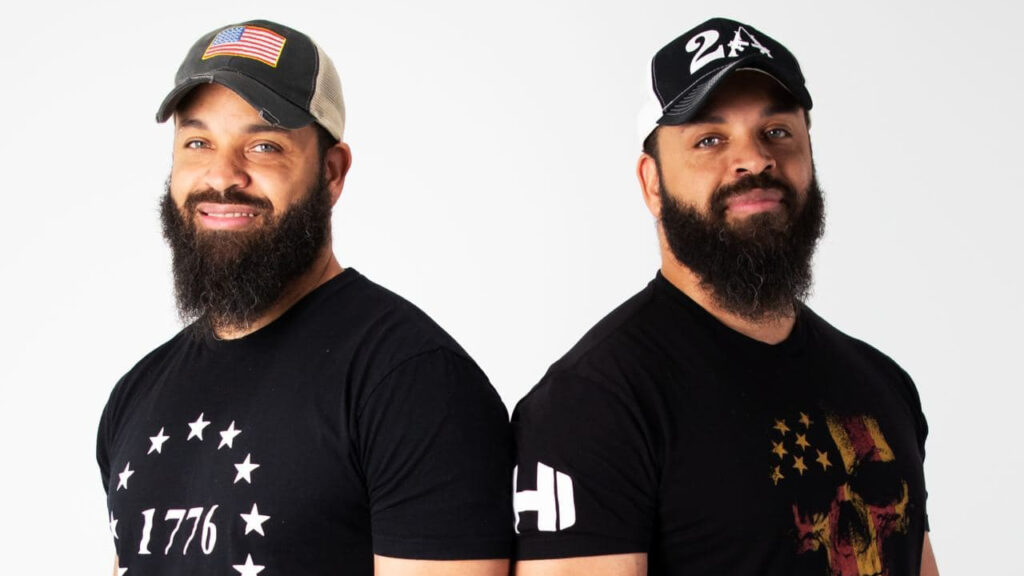
The Hodge Twins started off on YouTube as fitness influencers. After a while, they were doing comedic critiques on videos, sometimes being edgy and offensive while doing it. They slowly morphed into anti-black conservative panderers to maintain an audience online.
Bamboozled‘s extreme minstrel imagery is greatly exaggerated. But to me, that is the point. In reality, the minstrelsy is much more subtle and thus, deniable. Putting those images in one’s face makes one confront the ugly truths about the treatment of black people and culture in media. We no longer see people in literal blackface (at least most of the time) performing exaggerated and dehumanizing stereotypes. But we do see a constant parade of harmful “marketable stereotypes” which, in my opinion, aren’t too much better. Bamboozled is actually less of a reimagined condition and more of an amplified mirror held up to society, including black people themselves.
Conclusion
Spike Lee’s Bamboozled shows us that racial exploitation is not a glitch in a capitalistic society built on racism. Instead, it is the feature. What was thought of as grotesquely absurd satire is now being appreciated and studied. There are video essays about this movie by young content creators online. In true Spike Lee fashion, no one in this movie is immune from criticism. Even the somewhat “conscious” but hypocritical Mau Mau, who are miseducated “hoteps” (pro-black people who are usually socially conservative while embracing pseudo-intellectualism) that constantly indulge themselves in alcohol and marijuana while having trouble making an articulate statement, catch strays in this movie, y’know what I mean? The modern media ecosystem proves that this movie wasn’t a fantasy. Rather, it was a diagnosis of our society in the form of dark satirical comedy.
I am a leftist. I am an unapologetic leftist. I am an unapologetic pan-African, pro-black leftist. I am an unapologetic pan-African, pro-black leftist who is critical of everyone, very outspoken, speaks up for marginalized groups, and is an atheist. Because of this, I have many detractors on my social media. As of today, I have nearly 42,500 followers on my Facebook page and over 3000 on my TikTok. My reach is relatively high. This translates to more people who don’t like me or my posts engaging in them. With that engagement comes some… *ahem*… “colorful” comments.
Among those “colorful” comments are those made usually by angry conservative white men who attack me and my character based on anti-black family stereotypes. To them, I am perpetually unemployed due to laziness. I am chronically and happily dependent on government welfare programs to live. I am either a high school dropout, a GED recipient, a high school graduate who was in the lower rankings in his class, or a man who didn’t earn his spot in college but was just given the spot to fill a quota. I don’t believe in marriage, have several “baby mamas,” and don’t take care of my children. This doesn’t count the other stereotypes attached to black men that I get regularly. Just yesterday, a friend of mine called me. he was lamenting about the stereotypes that he has to endure in his comments section as a black man.
Stereotypes About the Black Family
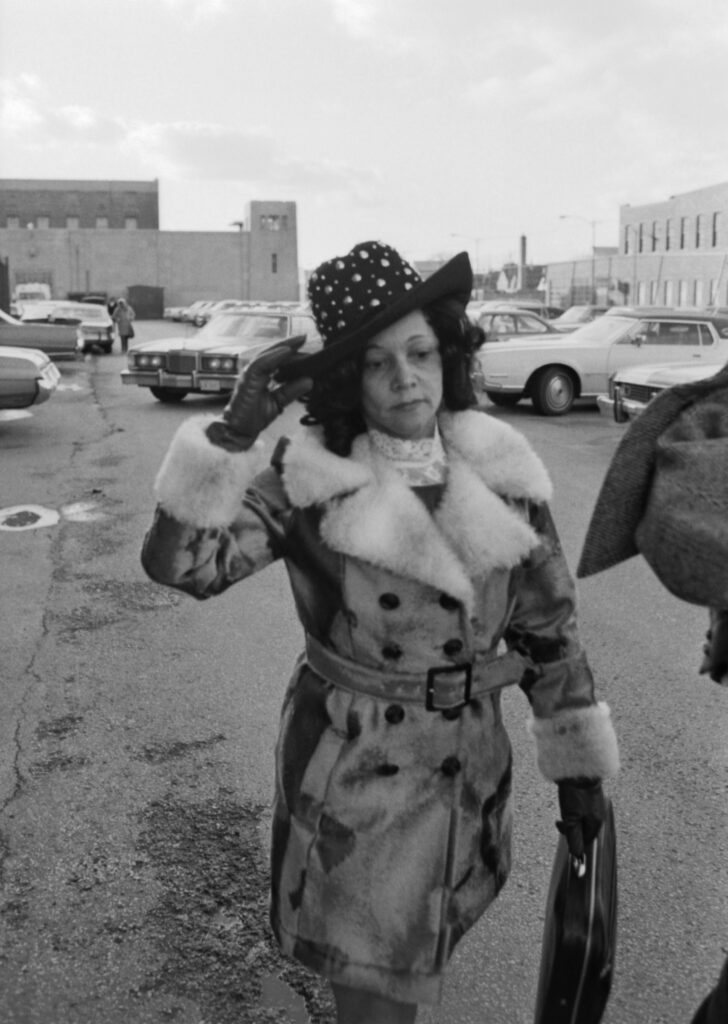
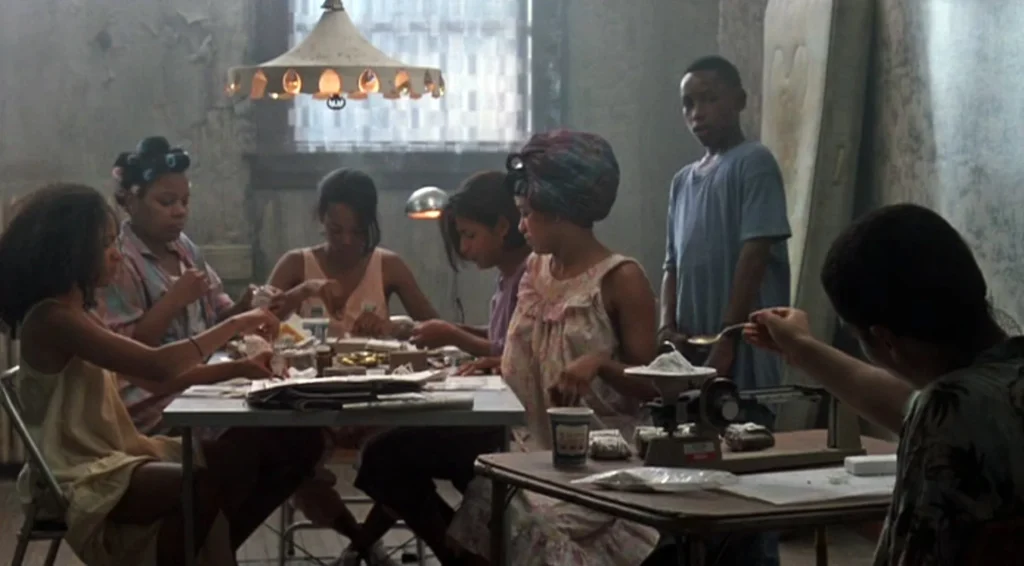
Linda Taylor was a mixed-race woman con artist who became the mascot for “welfare queens” during the 1980s. Then President Ronald Reagan used her to forward the stereotype about black women using social welfare programs to live a lavish life.Scene in the movie “Fresh” in which the very young protagonist, Fresh, is running a drug house.
The media often portrays black families in a negative light. Sometimes news programs and movies paint black mothers as unreasonably belligerent “welfare queens” who are prone to violent outbursts, constantly emasculate the men in their lives instead of supporting them (a notion that is shared by many black men in so-called “red-pill content, also known as “the manosphere“), and have multiple “baby-daddies” from several failed relationships that they are culpable of due to bad attitudes or promiscuity. Other times, black mothers are physically large, undesired, asexual women who only live to be caretakers of the people around them, especially white families. Black children are often depicted as coming from impoverished and dysfunctional homes. In these portrayals, they are often involved in criminal activity because of this. Even in cases where black children are “humanized,” they are seen participating in illegal endeavors to assume the responsibility that their absentee fathers and their neglectful mothers couldn’t handle. Thus, they are aged out of their innocence, even in television programs and movies. Black fathers are shown as mostly broke and lazy absentee fathers who love to make babies but don’t take care of them. We are seen as unintelligent, criminal, substance-abusing monsters who beat our wives and children harshly and mercilessly.
The Reality About Black Fathers
Three generations of black males together.
In reality, black fathers are the most active fathers with our children out of every other racial group, despite the conflations of black legitimacy with black male parental involvement by people like the late Charlie Kirk and others who used to paint negative stereotypes about black fathers. Most black men that I know personally are involved in the lives of their children. Many of them have at least partial custody of their children, even though they are not married to the child’s mother. In fact, many of the black men who engage in criminal behavior, like selling drugs, often cite caring for or providing for their children as a reason for it.
In the song “Foe Life” by West Coast hip-hop artist Mack 10, he raps:
“Cause a nigga gotta eat, fuck the world Let the bullets hurl and feed my baby girl”
In the beginning of “Juicy”, rapper Notorious B.I.G. said,
“Yeah, this album is dedicated to all the teachers that told me I’d never amount to nothin’, to all the people that lived above the buildings that I was hustlin’ in front of [and] called the police on me when I was just tryin’ to make some money to feed my daughter (it’s all good), and all the niggas in the struggle. You know what I’m sayin’? It’s all good, baby baby!”
How Does This Relate to Me?
However, I never been involved in the sale or distribution of illegal drugs. I’ve been working since I was 10 years old and had my first paycheck job at the age of 13. I came from a two-parent home in which my father was an entrepreneur. I married a woman at the age of 24, and we had three children together. Neither of us came into the marriage with children. We were married for 5 years before our first child was born. Our marriage ended after 22 years, and I became the primary parent to my three children, taking care of their daily needs. I was a paid paramedic /firefighter for years, was on the Dean’s List in college, and was an active PTO dad for all my children. I rarely drink or smoke marijuana.
However, let those whose only contact with black folks is in the evening news tell it, and I am some embodiment of negative black stereotypes. These notions are not benign. They have real-life consequences. Such negative stereotypes have gotten me harassed by police when I was younger, and perhaps closed the door on opportunities for me.
Local news stories and the utterances of famous talking heads in legacy media and online push these narratives. What is disturbing is that many people cannot see the racist undertones attached to the “harmless” facts and figures that are constantly thrown out to the public, yet rarely scrutinized.
Ten years ago, Critical Race Theory was a relatively obscure academic course, typically offered at the university or graduate school level. Relatively few people, mostly those with majors and/or minors in sociology or African and African American Studies, or those seeking a law degree, were aware that this course even existed. Since around 2020, Critical Race Theory (CRT) has become one of, if not the most controversial, subjects in schooling, and the proverbial boogeyman of everything wrong with contemporary education in the United States. For those on the right side of the political spectrum, CRT has been blamed for many of the societal ills in today’s America.
But what exactly is Critical Race Theory?
CRT is an academic and legal framework created by law school professors, activists, and academics, including Derrick Bell, Alan Freeman, Kimberlé Crenshaw, Angela Harris, Charles Lawrence, Mari Matsuda, and Patricia Williams during the mid-1970s. These individuals observed that the advances of the Civil Rights Movement were stalling and even being rolled back. They realized that racism was getting more covert and subtler than it was during the 1950s and 1960s, the peak of the Civil Rights Movement. They concluded that new theories and legal strategies were necessary to identify and combat these more covert forms of racism.
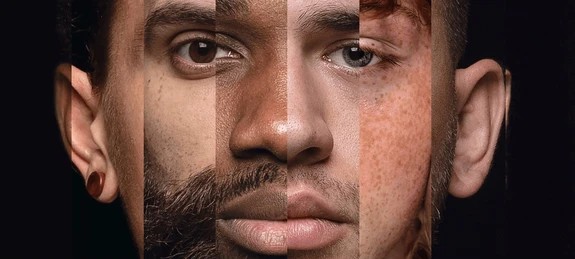
Critical Race Theory teaches that race is not a legitimate scientific taxonomical classification of human beings with varying physical differences. Instead, race is a somewhat arbitrary social construct in which the effects of the belief in the scientific validity of race are still very socially significant.
Mosaic of different racial characteristics forming one male face.Black and White twins, Lucy (L) and Maria Aylmer (R). The girls are fraternal twins with the same biological parents, Donna Douglas (a black woman with a white parent) and Vince Aylmer (a white man). Often mistaken for friends, the girls often carry birth certificates to prove that they are sisters.
It also teaches that racism is not merely the anomalous product of misled individuals. Rather, it is the embedded feature of a society built on racial separation, animosities, and rigid hierarchies. Racism is woven into laws, policies, and practices despite the claims and assertions of meritocracy and color-blindness. Racism is not always the intentional consequence of malevolent deeds of individuals due to ignorance, hatred, or irrationality. Instead, racism is more often a manifestation of the unintentional consequences of subconscious choices, even though these consequences can be predicted by those who are aware of the ambience of racism.
Opponents of CRT argue that it is a racist ideology, rooted in Marxism, that demonizes white people for the actions of a relative few in the past. In their minds, CRT scapegoats white people for the socioeconomic and moral failure of many black people and other racial minorities. They conflate Diversity, Equity, and Inclusion (DEI) initiatives (such as DEI training) with Critical Race Theory courses. They claim that CRT is being taught to children in K-12 schools in non-English and Non-Social Studies courses.
The Backlash…
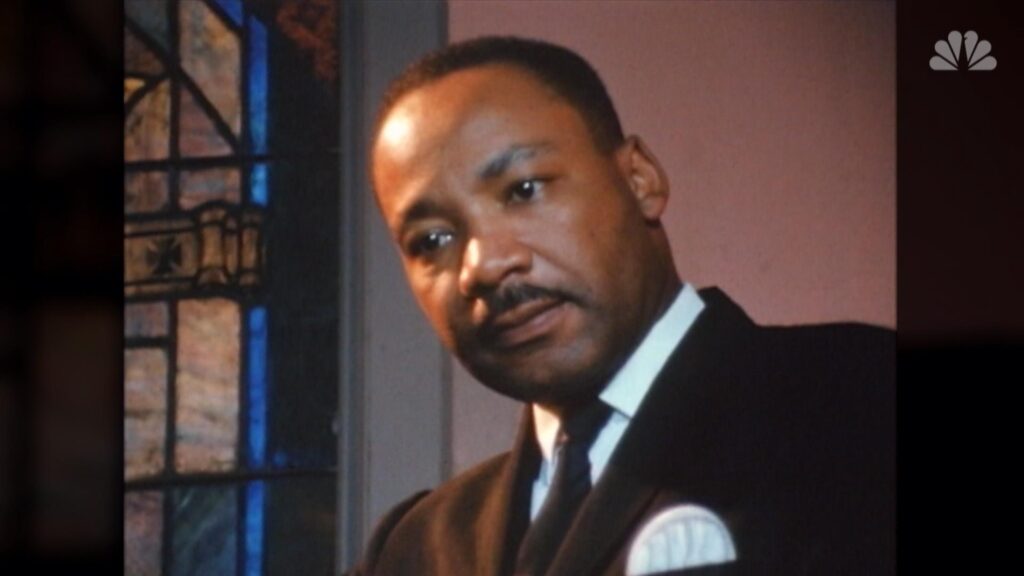
Dr. Martin Luther King Jr during his May 8, 1967, NBC Interview
“… And honesty impels me to admit that America has a broad racist element still alive. Racism is still existing in American society in many areas of America, North and South. And the other thing is that there has never been a single solid, determined commitment of large segments of white America on the whole question of racial equality. I think we have to see that vacillation has always existed. Ambivalence has always existed. And this, to me, is the so-called “white backlash.” It is merely a new name for an old phenomenon. I see the white backlash as a continuation of the same ambivalence and vacillation of white America on the whole question of racial justice that has existed since the founding of our nation.
I think the other thing that we must see at this time is that many of the people who supported us in Selma, in Birmingham, were really outraged about the extremist behavior toward Negroes, but they were not at that moment, and they are not now committed to genuine equality for Negroes. It’s much easier to integrate a lunch counter than it is to guarantee an annual income, for instance, to get rid of poverty for Negroes and all poor people. It’s much easier to integrate a bus than it is to make genuine integration a reality, quality education a reality in our schools. It’s much easier to integrate even a public park than it is to get rid of slums. I think we are in a new era, a new phase of the struggle, where we have moved from a struggle for decency, which characterized our struggle for 10 or 12 years, to a struggle for genuine equality. And THIS is where we’re getting the resistance, because there was never any intention to go this far. People were reacting to Bull Connor [Commissioner of Public Safety in Birmingham, Alabama] and to Jim Clark [sheriff of Dallas County, Alabama] rather than acting in good faith for the realization of genuine equality.”
Christopher Rufo seemed like a man looking for a cause. He found it in 2018 when he ran across anti-bias documents while running for a Seattle city council seat. He lost his race, but he gained a cause to advance his political career in other ways. He then started collecting curricula and slide shows for anti-racism seminars throughout Seattle, Washington. He interpreted the methods and bullet points from these workplace trainings as anti-white racist attacks.
The anti-racism seminars pointed him to books by anti-racism authors. Going further down the proverbial rabbit hole, the anti-racism authors, such as Ibram X. Kendi and Robin DiAngelo, led him to CRT and the works of its founders.
Rufo leaned heavily on CRT and its connections to more radical and leftist philosophical influences while ignoring influences of those more moderate or with more mainstream appeal, like Dr. Martin Luther King Jr., James Baldwin, and others. He was convinced that CRT was radical and Marxist and therefore a poison on this good and moral capitalistic society. Rufo found a new battle in the continuing culture war between the political left and the political right.
Christopher Rufo launched a relentless propaganda campaign against CRT. Critical Race Theory became a catch phrase for every aspect of black-centered, anti-racist, and inclusive lessons within all school programs, including K-12.
Rufo was proud of his work and how quickly news outlets and politicians on the right caught on to his messaging. Because of this, he wasn’t shy about bragging about his methods. He wrote in a correspondence with Angie Wang of the New Yorker:
“We’ve needed new language for these issues. ‘Political correctness’ is a dated term and, more importantly, doesn’t apply anymore. It’s not that elites are enforcing a set of manners and cultural limits, they’re seeking to reengineer the foundation of human psychology and social institutions through the new politics of race, It’s much more invasive than mere ‘correctness,’ which is a mechanism of social control, but not the heart of what’s happening. The other frames are wrong, too: ‘cancel culture’ is a vacuous term and doesn’t translate into a political program; ‘woke’ is a good epithet, but it’s too broad, too terminal, too easily brushed aside. ‘Critical race theory’ is the perfect villain
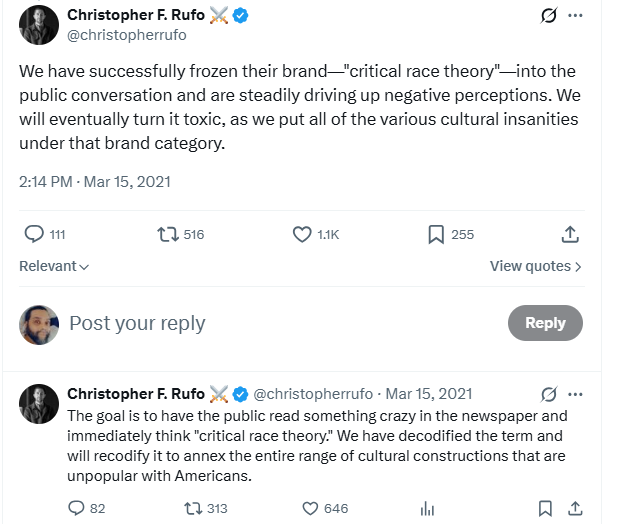
Its connotations are all negative to most middle-class Americans, including racial minorities, who see the world as ‘creative’ rather than ‘critical,’ ‘individual’ rather than ‘racial,’ ‘practical’ rather than ‘theoretical.’ Strung together, the phrase ‘critical race theory’ connotes hostile, academic, divisive, race-obsessed, poisonous, elitist, anti-American.” Most perfect of all critical race theory is not ‘an externally applied pejorative.’ Instead, it’s the label the critical race theorists chose themselves.”
On X, Rufo made this post bragging about his work:
Rufo did a very good job with his propaganda, but he had given up the game on a public social media platform and to a writer in a media magazine. His ego is about as big as his goals, and he couldn’t help but take a bow and a victory lap. His work was done.
What now?
The issue with CRT was that it was a little bit too vague and too alien for most people. Rufo’s propaganda campaign worked, but not as well as he thought it would. CRT, as a sinister Marxist plot against white people and America, was replaced a couple of years ago by DEI. CRT is mainly about race. DEI can be about anything and everyone that doesn’t check all boxes for every privileged group in the various social hierarchical systems that exist in the United States. CRT is still looked at with suspicion by those on the political right, with school-aged children who may have gotten offended after a history lesson about chattel slavery in the United States. There were laws passed in many states to ban CRT in K-12 schools. However, there was no evidence that the course itself was being taught in K-12 schools. Rather, only certain ideas associated with CRT have made it to K-12 classrooms. Also, these bans are usually vague, with CRT being poorly defined.
Christopher Rufo got many people on the right side of the political spectrum to hate and fear a university and law school course that they don’t really understand through a constant propaganda campaign. He recognized that the obscurity of the course was its weakness from a public relations perspective. He also understood that emancipatory movements and initiatives were almost always followed by irrational reactionary backlash. He made a relatively unknown course and made it public enemy #1 for a period of four or five years.